Exploring the Unseen: An Introduction to the Spirit World
“For by him were all things created, that are in heaven, and that are in earth, visible and invisible, whether they be thrones, or dominions, or principalities, or powers: all things were created by him, and for him.” — Colossians 1:16
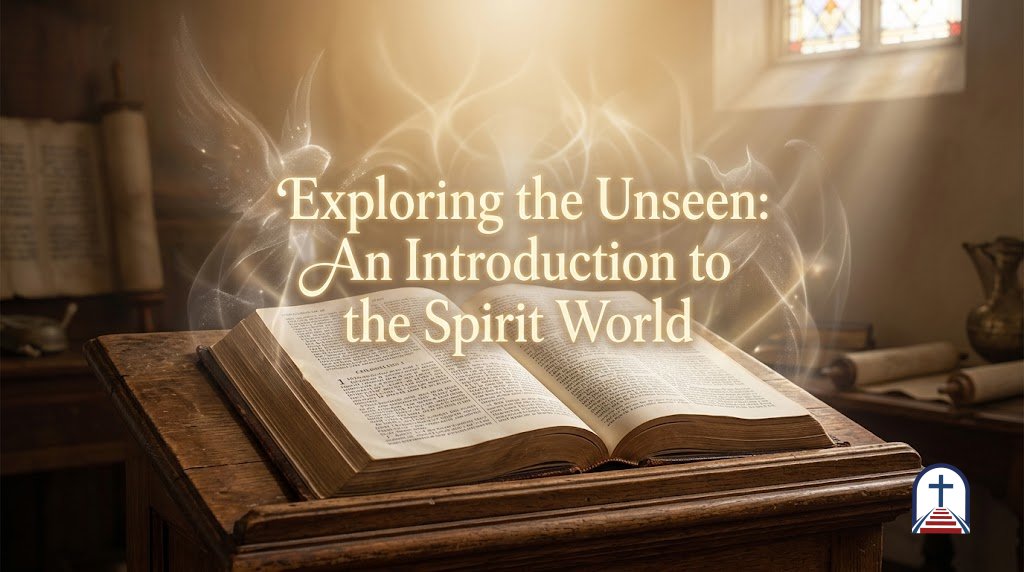
A biblically based definition of the “spirit world” acknowledges that reality extends far beyond what can be observed with the physical senses. The spirit world is the unseen, immaterial realm of existence created by God, operating alongside, and frequently interacting with, the physical universe. It encompasses the eternal dwelling places of God and spiritual beings, the temporary realms of the dead, and the active spiritual forces that influence human history and individual lives.
“The spirit world is the invisible reality, authored by God, consisting of heavenly and infernal realms, and populated by divine, angelic, demonic, and human spirits, all ultimately subject to the sovereign authority of Jesus Christ.”
The Importance of Understanding the Spirit World
For a growing Christian disciple, studying the spirit world is not an exercise in idle curiosity or mystical speculation; it is an essential component of robust biblical theology. A failure to understand the unseen realm leaves a believer vulnerable to deception and spiritually ill-equipped for the realities of the Christian life.
As we embark on this Bible study series, we must recognize why this knowledge is vital:
- Recognizing Spiritual Warfare: The Bible clearly teaches that Christians are engaged in an invisible battle. Ephesians 6:12 reminds us that we wrestle not against flesh and blood, but against principalities and powers. Understanding the enemy and his tactics is crucial for standing firm in the faith.
- Cultivating an Eternal Perspective: Knowing the realities of Heaven, Hell, and the final judgment shifts our focus from the temporary struggles of this life to the eternal promises of God (Matthew 25:31-46). It anchors our hope in the new creation (Revelation 21:1-4).
- Deepening our Worship of God: As we comprehend the majesty of God’s unseen creation and His sovereign rule over all visible and invisible powers, our awe and reverence for the Triune God are magnified.
- Clarifying Biblical Doctrine: The entire narrative of Scripture—from Creation and the Fall to Redemption and Restoration—is intertwined with the activity of the spirit world. A solid grasp of essential doctrines requires an understanding of spiritual realities.
Realms of the Spirit World
Throughout this series, we will explore the specific dimensions and locations within the spirit world as revealed in Scripture.
Heaven
Heaven is the ultimate, glorious dwelling place of God, where His presence is fully manifested. It is a realm of absolute holiness, devoid of sin, sorrow, and death. The Bible speaks of Heaven as the future inheritance for all who are saved by grace through faith in Jesus Christ (Ephesians 2:8-9). Ultimately, God’s plan is to unite Heaven and Earth in a New Creation, where He will dwell with His people forever (Revelation 21:3-4).
Paradise
Often associated with Heaven, Paradise represents a state of blessedness and peaceful rest for the righteous after physical death. Jesus promised the repentant thief on the cross, “To day shalt thou be with me in paradise” (Luke 23:43). We will examine how Paradise relates to the presence of the Lord and the intermediate state of believers awaiting the final resurrection.
Hell
Hell is the solemn and tragic reality of eternal separation from God. It is a place of conscious torment prepared originally for the devil and his angels, but also the final destination for those who reject God’s offer of salvation (Matthew 25:41). The doctrine of Hell underscores the severe consequences of sin (Romans 6:23) and the absolute necessity and urgency of Christ’s atoning sacrifice.
Beings of the Spirit World
The unseen realm is populated by various beings, each with distinct natures, purposes, and destinies in God’s grand design.
The Triune God
At the pinnacle of all existence is the eternal, uncreated God, who is Spirit (John 4:24). We will delve into the profound mystery of the Trinity—God existing as three distinct persons: Father, Son, and Holy Spirit. Understanding God’s attributes, such as His omniscience, omnipotence, and holiness (Isaiah 6:3), is the foundation of all theology. The Holy Spirit, in particular, plays a critical role in the believer’s life, convicting, sanctifying, and empowering us for service (John 14:26; Acts 1:8).
The Saints
In the context of the spirit world, the “saints” refer to the spirits of believers who have departed this physical life and are now in the presence of the Lord (2 Corinthians 5:8). While they no longer possess physical bodies, they are fully conscious and await the future bodily resurrection when Christ returns (1 Thessalonians 4:16-17).
Angels
Angels are created spiritual beings who serve as God’s messengers, warriors, and ministers to the saints (Hebrews 1:14). They possess immense power and intelligence, continually worshiping God around His throne. We will explore their hierarchy, their specific roles in biblical history, and how they operate under God’s sovereign command to execute His will on earth.
Demons
Demons are spiritual entities that have rebelled against God, led by Satan, the adversary. They are entirely evil and actively seek to deceive humanity, oppose God’s kingdom, and destroy lives. However, Scripture assures us that their power is limited by God, and their ultimate defeat has already been secured through the crucifixion and resurrection of Jesus Christ (Colossians 2:15).
Next Steps: Engaging with Your S.T.E.P.S. Journey
As we prepare to dive deeper into the unseen realities of the spirit world, it is crucial to ground your study in the authoritative Word of God. Relying on human imagination or cultural myths about spirits and the afterlife will lead to error; the Bible must be our ultimate guide (Psalm 119:105).
To maximize your spiritual growth during this series, consider the following next steps in your S.T.E.P.S. discipleship journey:
- Review Your THEOLOGY Assessment: Look at your scores in the THEOLOGY section of the S.T.E.P.S. assessment. Specifically, review your understanding of the attributes of God (Question 20), the person of the Holy Spirit (Question 23), and the return of Christ (Question 26). Identifying areas where your doctrinal knowledge is weak will help you focus your study.
- Engage with the “Essential Doctrines” Lesson: The spirit world is deeply connected to core Christian beliefs. Revisit the Theology lessons on Essential Doctrines to ensure you have a solid grasp of Christ’s divinity, the nature of God, and His redemptive plan. This will provide a necessary theological anchor as we explore more complex topics.
- Prepare for Spiritual Warfare: Understanding demons and the reality of the unseen realm should naturally lead to a focus on spiritual defense. Review the lessons under “Facing Challenges in the Christian Life,” particularly focusing on recognizing and resisting spiritual opposition through faith and the armor of God (Ephesians 6:10-18).
- Practice Scripture Memorization: As you learn about the spirit world, memorize key verses that affirm God’s sovereignty and your security in Christ. Memorizing Scripture is a vital practice for hiding God’s Word in your heart and resisting the deceptions of the enemy (Psalm 119:11).
By embarking on this study of the spirit world, you are taking a significant step toward spiritual maturity. May God grant you wisdom, discernment, and a renewed awe of His glorious, invisible Kingdom.