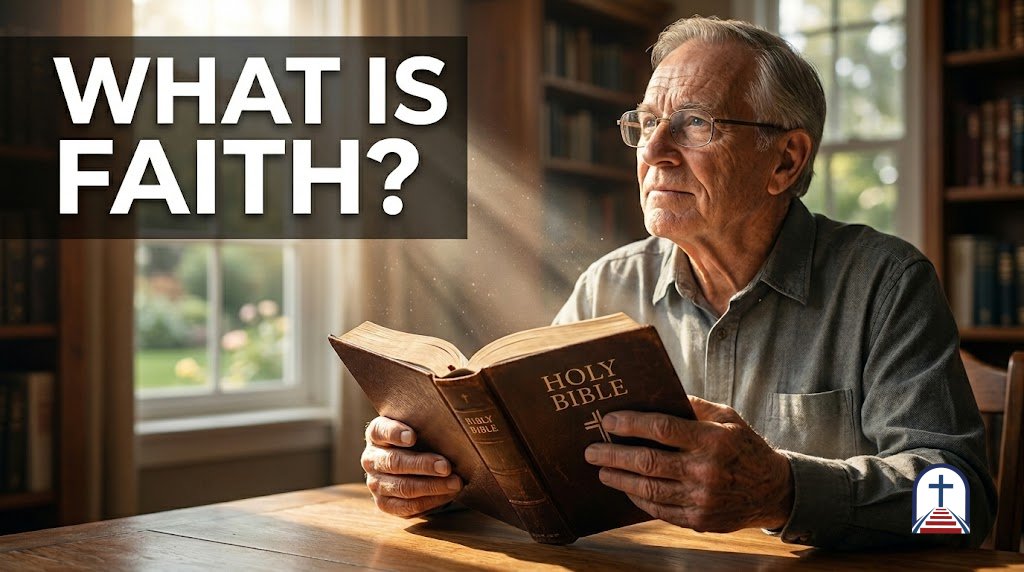
What is Faith?
“Now faith is the substance of things hoped for, the evidence of things not seen.” — Hebrews 11:1
A biblically based definition of faith begins with this foundational truth. Scripturally, faith is not a blind leap into the dark or mere wishful thinking. According to the Bible, it is a concrete reality—the substance (meaning a firm foundation or assurance) of our future eternal hopes, and the clear evidence (or conviction) of spiritual realities that we cannot see with our physical eyes. True biblical faith is a personal placement of absolute trust and complete reliance upon the nature, character, promises, and redemptive work of Jesus Christ. It is the essential instrument through which a disciple receives salvation and walks out a life of true holiness.
“Great faith is not based on you, but on the object of your faith: a great God!”
The Biblical Foundation of Saving Faith
Salvation is Received Through by Grace Through Faith Alone
According to the SHAPE framework of discipleship, salvation is the primary step in restoring the relationship between God and humanity that was broken by sin in the Garden of Eden. The Bible explicitly declares that this redemptive grace cannot be earned through personal merit or legalistic deeds; it must be received strictly through faith.
-
Ephesians 2:8-9: “For by grace are ye saved through faith; and that not of yourselves: it is the gift of God: Not of works, lest any man should boast.”
-
Romans 3:22: “Even the righteousness of God which is by faith of Jesus Christ unto all and upon all them that believe: for there is no difference:”
-
Romans 3:28: “Therefore we conclude that a man is justified by faith without the deeds of the law.”
The Progression of Saving Faith
The Bible outlines a clear progression for how saving faith operates within the human heart to secure redemption and transform an individual:
-
Hearing the Truth: True biblical faith cannot exist apart from objective truth. It requires a baseline exposure to the Word of God. As Romans 10:17 states: “So then faith cometh by hearing, and hearing by the word of God.”
-
Believing and Confessing: A person must believe in their heart that Jesus’ sacrifice is the definitive payment for sin, and they must verbally declare His lordship. As Romans 10:9 notes: “That if thou shalt confess with thy mouth the Lord Jesus, and shalt believe in thine heart that God hath raised him from the dead, thou shalt be saved.”
-
Receiving the Spirit: When a person exercises faith, the Holy Spirit indwells their soul, serving as the ultimate seal of salvation and restoring their broken relationship with the Father. As Romans 8:16 asserts: “The Spirit itself beareth witness with our spirit, that we are the children of God:”
The Theological Traits of Faith
To build a robust Theology, a disciple must comprehend the essential attributes of biblical faith. Scriptural faith is dynamic, relational, and characterized by several specific theological markers:
-
It Pleases God: Faith is the non-negotiable prerequisite for any meaningful relationship with the Creator. Hebrews 11:6 declares: “But without faith it is impossible to please him: for he that cometh to God must believe that he is, and that he is a rewarder of them that diligently seek him.”
-
It Operates Beyond Sight: Faith anchors itself in the eternal realm rather than the shifting circumstances of the physical world. 2 Corinthians 5:7 summarizes this walk: “For we walk by faith, not by sight:”
-
It Works Through Love: True faith is never sterile or unfeeling. Because God is love, genuine faith naturally manifests His character. 1 John 4:7 reminds us that “every one that loveth is born of God, and knoweth God.”
-
It Serves as a Spiritual Shield: In the landscape of spiritual warfare, faith acts as a vital protective barrier against demonic opposition. Ephesians 6:16 commands: “Above all, taking the shield of faith, wherewith ye shall be able to quench all the fiery darts of the wicked.”
Faith Demonstrated in Practice
Faith Produces Active Obedience
A common pitfall in Christian theology is treating faith as a purely mental assent to theological facts. However, the Practice aspect of discipleship demonstrates that true faith always results in outward, actionable obedience to the commands of Jesus. Faith without corresponding action is spiritually dead and completely barren.
-
James 1:22: “But be ye doers of the word, and not hearers only, deceiving your own selves.”
-
James 2:17: “Even so faith, if it hath not works, is dead, being alone.”
When a disciple truly trusts God, that inner conviction will inevitably produce visible fruit. For example, a person who relies on God’s sovereignty will develop a consistent habit of prayer, maintain personal holiness, and prioritize faithful biblical stewardship.
Trusting God Through Trials
Faith is refined and proven authentic when it is tested by suffering, persecution, and difficult life circumstances. Rather than wavering when hardships hit, a mature disciple leans completely onto the promises of Scripture, knowing that God works all things together for good.
-
James 1:2-3: “My brethren, count it all joy when ye fall into divers temptations; 3 Knowing this, that the trying of your faith worketh patience.”
-
Romans 8:28: “And we know that all things work together for good to them that love God, to them who are the called according to his purpose.”
Next Steps: Engaging with Your S.T.E.P.S. Journey
Growing in faith is a lifelong, deliberate pursuit that requires regular self-evaluation and intentional action. To further cultivate your faith and expand your spiritual maturity within the broader discipleship ecosystem, consider taking the following next steps:
-
Complete Your S.T.E.P.S. Discipleship Profile Inventories: If you have not done so, answer the diagnostic questions across the five primary core areas to determine your current discipleship level (e.g., Beginning, Developing, Growing, Mature, or Multiplying).
-
Engage with the SHAPE Inventory: Review the specific section regarding Salvation and Holiness. Dive deeply into learning how your unique personal attributes and life experiences have been uniquely orchestrated by God to fulfill His specific, pre-ordained plans for your life.
-
Deepen Your Theological Framework: Move past surface-level readings by exploring the Theology lessons on the Essential Doctrines of the faith. Learn how to implement proper biblical interpretation methods, like the historical-grammatical approach, to protect yourself against false teaching.
-
Cultivate Consistent Spiritual Habits: Review the Practice scoring rubric to build daily disciplines. Establish a structured Bible reading plan, keep a detailed prayer journal, and lean heavily on your local church community to build strong, processing relationships that foster deep spiritual accountability.