Who is God?
An Introduction to the Triune Creator
“Go ye therefore, and teach all nations, baptizing them in the name of the Father, and of the Son, and of the Holy Ghost.” — Matthew 28:19
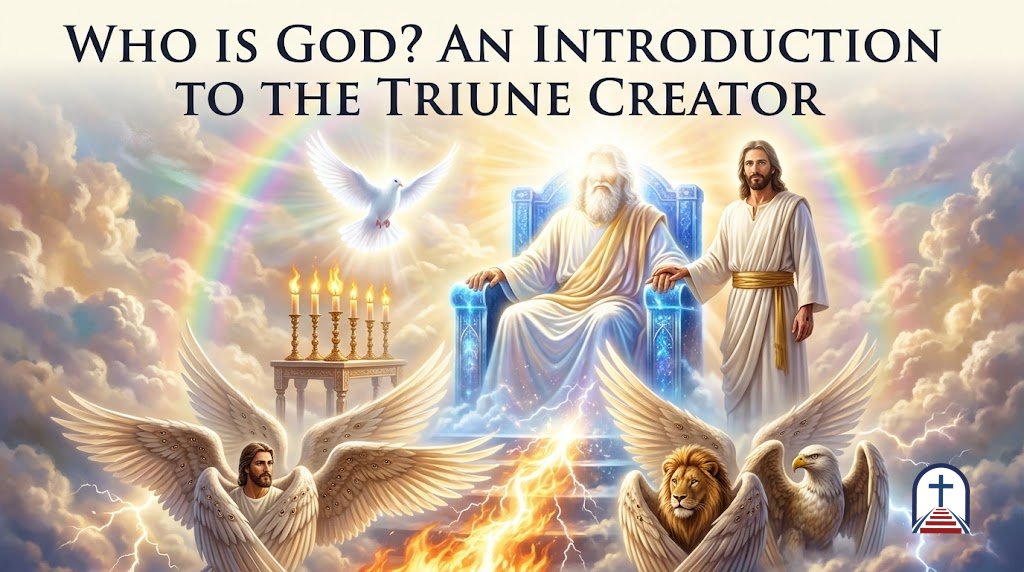
A biblically based definition of God is that He is the eternal, supreme, and uncreated Spirit who created and sustains the universe, existing perfectly as a Trinity: God the Father, God the Son, and God the Holy Spirit. He is infinite in power, perfect in holiness, and abounding in love and faithfulness.
“God is the one true, holy, and sovereign Creator of all things, who exists eternally in three distinct but co-equal persons, working in perfect unity to redeem humanity and restore His creation.”
Embarking on a Deeper Journey: The Godhead
In our exploration of the spirit world, we will discover the realms of Saints, Angels, and Demons, and we established a foundational understanding of God as the Supreme Being. However, to truly grow as a Christian disciple, we cannot merely observe God from a distance as a general spiritual force. We must come to know Him intimately.
This article serves as the introduction to a dedicated sub-series focusing specifically on the nature and character of God. Over the next few studies, we will look individually at the Father, the Son (Jesus Christ), and the Holy Spirit. For a growing disciple, understanding who God is forms the bedrock of all faith, practice, and worship. A flawed view of God will inevitably lead to a flawed Christian life.
The Nature and Character of God
Before diving into the distinct persons of the Trinity in upcoming articles, we must first establish the foundational attributes of God’s nature. God is not like us; He is entirely “other,” yet He has chosen to reveal Himself to humanity through Scripture and creation.
The Divine Attributes
God possesses characteristics that define His very essence. As a disciple, knowing these attributes changes how we pray, worship, and trust Him.
- Holiness: God is absolutely pure and completely set apart from sin. The prophet Isaiah caught a glimpse of this, hearing the angels cry, “Holy, holy, holy, is the LORD of hosts” (Isaiah 6:3).
- Omnipotence and Omniscience: God is all-powerful, reigning sovereignly over all creation (Jeremiah 32:17). Furthermore, He is all-knowing; nothing is hidden from His sight, as detailed in Psalm 139:1-6.
- Justice and Faithfulness: God is perfectly just, ensuring that righteousness prevails (Psalm 89:14), and He is faithfully loyal to His covenant promises (Deuteronomy 7:9).
- Creator and Sustainer: As God the Father, He is the originator of the world, demonstrating His intentional design, order, and beauty (Genesis 1:1). He created humanity in His own image (imago Dei) with intrinsic worth and a specific purpose.
Learn more: The Attributes of God
The Mystery of the Trinity: One God, Three Persons
One of the most profound and essential doctrines of the Christian faith is the Trinity. Christianity is strictly monotheistic—we believe in only one God. However, the Bible reveals that this one God exists eternally as three distinct persons.
The Father, The Son, and The Holy Spirit
Each person of the Trinity shares the exact same divine essence, yet they fulfill distinct roles in the grand narrative of redemption:
- God the Father: The architect of creation and salvation, who out of His great love sent His Son to redeem a fallen world.
- God the Son (Jesus Christ): The Word made flesh, who took on humanity to reveal the Father, live a sinless life, die an atoning death on the cross, and rise again to conquer sin and death (John 1:1-14; Philippians 2:5-11).
- God the Holy Spirit: The comforter and empowerer, who dwells within believers, convicting the world of sin, regenerating the heart, and sanctifying the disciple to look more like Christ (John 14:26; Galatians 5:22-23).
Understanding this triune nature is not just a theological puzzle; it is a vital framework for relationship. When we pray, we typically pray to the Father, through the authority of the Son, by the power of the Holy Spirit.
Why Knowing God is Essential for Discipleship
Why dedicate an entire sub-series to studying the Father, Jesus, and the Holy Spirit? Because the depth of your discipleship will never exceed the depth of your theology.
The Theology section of the S.T.E.P.S. of Discipleship highlights that essential doctrines, such as the triune nature of God, define core Christian beliefs. Knowing God intimately anchors a believer against the shifting cultural tides and safeguards against false teaching (Galatians 1:8). When you face trials, knowing God’s faithfulness provides hope (Romans 8:28). When you battle temptation, knowing His holiness fuels your sanctification.
As we progress through this sub-series, prepare your heart to behold God in a fresh way. A true encounter with the living God always results in transformed living, deeper worship, and a passionate desire to fulfill the Great Commission.
Next Steps: Engaging with Your S.T.E.P.S. Journey
To prepare your heart and mind for this deep dive into the nature of God, take the following steps today:
- Evaluate Your THEOLOGY Assessment: Review your S.T.E.P.S. Theology Assessment, specifically Questions 20, 21, 22, and 23. Ask yourself honestly: Can I confidently explain the core attributes of God, the doctrine of the Trinity, and the distinct work of Jesus and the Holy Spirit?
- Study the Essential Doctrines: Turn to the “Essential Doctrines” lesson in the Theology section. Spend time this week reading the provided scriptures about God’s nature and character, specifically focusing on the Trinity (Matthew 28:19; 2 Corinthians 13:14).
- Meditate on His Attributes: Choose one attribute of God (Holiness, Justice, Omnipotence, Omniscience, or Faithfulness) and meditate on it daily. Use Psalm 119:15 to guide your reflection, allowing the reality of who God is to shape your daily prayers.