Who is God the Father?
The Sovereign Architect of Creation and Redemption
“But to us there is but one God, the Father, of whom are all things, and we in him; and one Lord Jesus Christ, by whom are all things, and we by him.” — 1 Corinthians 8:6
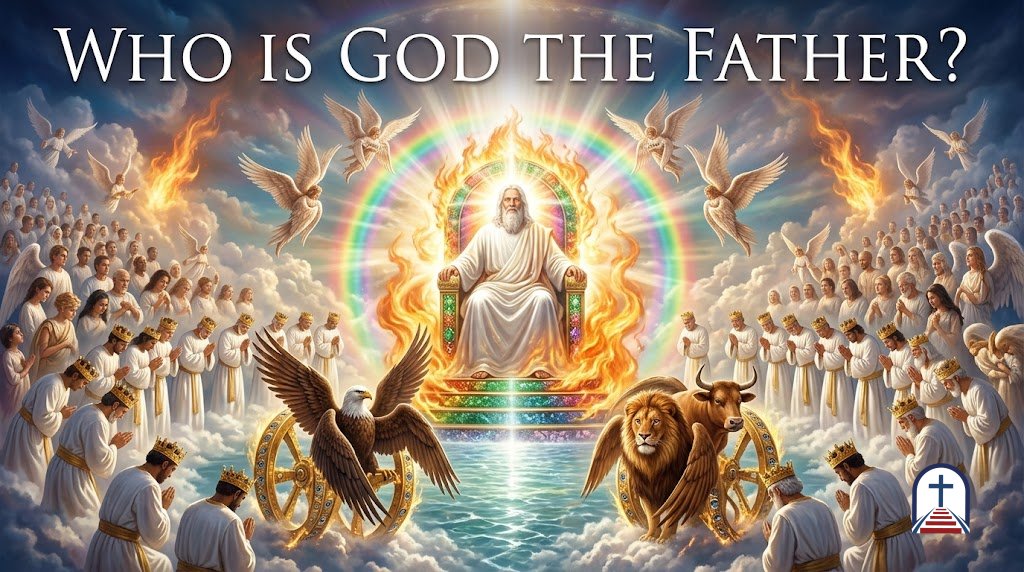
A biblically based definition of God the Father is that He is the first person of the eternal Trinity, the sovereign Creator and sustainer of the universe, and the loving architect of humanity’s redemption. He is the unbegotten source of all that exists, ruling over creation with perfect justice, immense power, and boundless love, and He relates to His redeemed people not merely as a distant deity, but as a deeply personal and loving Father.
“God the Father is the eternal source of all reality, the sovereign Lord of heaven and earth, who out of His infinite love sent His only begotten Son to redeem a fallen world, adopting believers into His eternal family.”
Deepening Our View of the Godhead
In our previous study introducing the Triune Creator, we established that Christianity is strictly monotheistic, worshiping one God who exists eternally in three distinct, co-equal persons: the Father, the Son, and the Holy Spirit. Having laid that foundation as we transition from our broader series on the spirit world, we now focus specifically on the first person of the Trinity.
For a growing disciple, understanding who God the Father is moves our faith from abstract theological concepts to intimate, relational reality. Often, believers heavily emphasize Jesus and the Holy Spirit while viewing the Father through a lens of fear or distance. However, a robust biblical theology reveals that the Father’s heart is the very wellspring of our salvation.
What Distinguishes the Father?
While the Father, Son, and Holy Spirit share the exact same divine essence and are completely unified in purpose, they operate in distinct roles and relationships within the Godhead.
To understand God the Father uniquely, we must look at His relational position within the Trinity:
- The Unbegotten Source: Theologically, the Father is entirely unoriginated. He is not begotten, nor does He proceed from anyone. Conversely, the Son is eternally begotten of the Father, and the Holy Spirit eternally proceeds from the Father (and the Son).
- The Supreme Architect: In the works of God (such as creation and salvation), the Father is the grand architect and initiator. He creates through the Son and by the Spirit. He decrees salvation, sends the Son to accomplish it, and sends the Spirit to apply it.
- The Sender: A vital distinction in the New Testament is that the Father is always the Sender, never the Sent. Jesus frequently stated that He came to do the will of Him who sent Him (John 6:38). The Father sends the Son, and the Father and Son send the Holy Spirit.
The Theological Traits of God the Father
To build a robust theology, a disciple must comprehend the essential attributes of God the Father. Scriptural revelation of the Father is majestic and deeply personal, characterized by several specific theological markers:
- The Sovereign Creator and Sustainer
God the Father is the originator of all matter, space, and time. Genesis 1:1 declares, “In the beginning God created the heaven and the earth”. He did not merely wind up the universe like a clock and step back; He actively sustains it. Psalm 103:13 and Matthew 6:9 remind us that His rulership over creation is absolute, demonstrating His order, purpose, and beauty.
- The Righteous Judge and Lawgiver
The Father is perfectly holy and perfectly just (Isaiah 6:3; Psalm 89:14). He is the supreme moral lawgiver of the universe. Because of His pure holiness, He cannot ignore sin (Romans 3:23). His justice requires that rebellion against His eternal law be addressed, setting the stage for the necessity of the cross.
- The Author of Redemption
The grand narrative of the Bible, from Genesis to Revelation, is anchored in the Father’s eternal plan to restore humanity. Salvation was not a reactionary backup plan; Ephesians 1:4-5 reveals that the Father chose us in Christ before the foundation of the world. He is the one who so loved the world that He gave His only begotten Son.
- The Loving Adopter
Perhaps the most staggering truth for a Christian disciple is that the Sovereign Lord of the universe desires to be called our Father. Through the redeeming work of Christ, believers are granted the right to become children of God. Romans 8:15 beautifully illustrates this: “For ye have not received the spirit of bondage again to fear; but ye have received the Spirit of adoption, whereby we cry, Abba, Father”.
Why Knowing the Father is Essential for Discipleship
Why must a growing disciple deeply understand the person of God the Father? According to the Theology section of the S.T.E.P.S. of Discipleship, understanding essential doctrines is crucial for aligning our lives with biblical truth and anchoring our holistic discipleship process.
- It Shapes Our Prayer Life:
Jesus explicitly taught His disciples to pray to the Father. “After this manner therefore pray ye: Our Father which art in heaven, Hallowed be thy name” (Matthew 6:9). Knowing the Father intimately transforms prayer from a religious chore into a vibrant conversation with a loving parent who holds the universe together. - It Cures Orphan Theology:
Many Christians live with an “orphan spirit,” striving to earn God’s love through works. Understanding that salvation is by grace through faith in Christ, not by works (Ephesians 2:8-9), helps a disciple rest in the Father’s unconditional love rather than spiritual performance. - It Provides Absolute Security:
When a disciple understands the absolute sovereignty and omnipotence of God the Father (Jeremiah 32:17), fear of the enemy and circumstances diminishes. Jesus assured His followers that no one can snatch them out of the Father’s hand (John 10:29).
Next Steps: Engaging with Your S.T.E.P.S. Journey
To continue growing in your understanding of God the Father and to apply these theological truths to your daily walk, take the following steps this week:
- Review Your THEOLOGY Assessment: Look back at your S.T.E.P.S. Theology Assessment, focusing on questions related to God’s Nature and Character. Identify any areas where you may have viewed the Father as distant or harsh, and ask the Holy Spirit to renew your mind with biblical truth.
- Study the Attributes of the Father: Dive into the “What Every Christian Should Know” section of your S.T.E.P.S. manual. Look up the scripture references for God’s attributes—Holiness (Isaiah 6:3), Justice (Psalm 89:14), Omnipotence (Jeremiah 32:17), and Faithfulness (Deuteronomy 7:9)—and journal how each attribute impacts your daily trust in Him.
- Meditate on Adoption: Spend time meditating on Romans 8:15 and 1 John 3:1. Consider what it means to be fully adopted by the Creator of the universe. Allow this truth to reshape how you approach Him in prayer, boldly calling Him “Abba, Father.”