
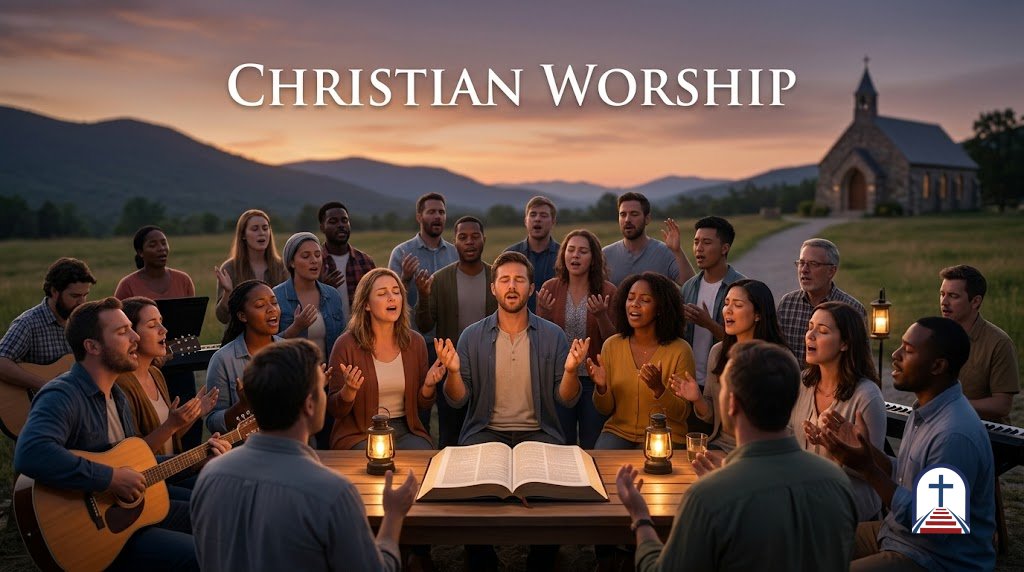
What is Christian Worship?
“But the hour cometh, and now is, when the true worshippers shall worship the Father in spirit and in truth: for the Father seeketh such to worship him. God is a Spirit: and they that worship him must worship him in spirit and in truth.” — John 4:23-24
A biblically based definition of Christian worship begins with the understanding that it is far more than a Sunday morning ritual or a specific genre of music. Christian worship is a central, all-encompassing part of the Christian life that is deeply rooted in Scripture. Theologically, it encompasses both individual and corporate expressions of love, reverence, devotion, and adoration directed exclusively toward God. True worship involves a heart and life entirely devoted to God, operating in “spirit and in truth,” meaning it engages our deepest inner being (the spirit) and is firmly anchored in the reality of who God is as revealed in Scripture (the truth).
“Worship is the believer’s holistic response of all that they are—mind, emotions, will, and body—to all that God is, says, and does.”
The Theological Foundation: Why Do We Worship?
Christians worship God because He alone is inherently worthy of all honor, glory, and praise. Worship is never generated in a vacuum; it flows naturally from a theological understanding of God’s character, His works, and His ongoing covenant relationship with humanity. The Bible outlines several foundational reasons why worship is the primary duty and joy of the believer:
-
God’s Inherent Worthiness and Holiness:
Worship is rooted in the recognition of God’s perfect character. He is holy, sovereign, and majestic. Psalm 29:2 commands, “Give unto the Lord the glory due unto his name; worship the Lord in the beauty of holiness”. God’s holiness sets Him completely apart from creation, and worship is our proper response of reverence and awe to His perfect nature. -
God as Creator and Sustainer:
As the Creator of all things, God continually sustains life. Everything exists by His power and for His pleasure. We worship Him because we owe our very existence to Him, as declared in Revelation 4:11: “Thou art worthy, O Lord, to receive glory and honour and power: for thou hast created all things, and for thy pleasure they are and were created”. -
Gratitude for Salvation:
The heart of Christian worship is deeply tied to redemption. We worship God because He provided the ultimate gift of salvation through the sacrifice of Jesus Christ. Romans 5:8 reminds us, “But God commendeth his love toward us, in that, while we were yet sinners, Christ died for us”. Our adoration is a natural response of thanksgiving for His grace, mercy, and the hope of eternal life. -
Obedience to God’s Commands:
Worship is not a suggestion; it is commanded throughout Scripture. Jesus taught that the greatest commandment is to love God with all our heart, soul, mind, and strength (Mark 12:30), and worship is the primary demonstration of this love. The Psalms continuously call all of creation to obedience in this matter: “Let every thing that hath breath praise the Lord” (Psalm 150:6).
Key Elements of Christian Worship
While worship is a posture of the heart, it is expressed through specific, biblically prescribed actions. These elements serve as the vehicles through which we offer our devotion to God.
Prayer and Adoration
Prayer is a vital act of worship, involving direct communication with the Creator. Through adoration, confession, thanksgiving, and supplication, believers fulfill the declaration of Psalm 34:1: “I will bless the Lord at all times; his praise shall continually be in my mouth”.
Praise Through Song
Music and song have always been integral to biblical worship. Singing engages the emotions and the mind, offering unified praise to God. Colossians 3:16 instructs believers to let the word of Christ dwell in them richly, “teaching and admonishing one another in psalms and hymns and spiritual songs, singing with grace in your hearts to the Lord”.
The Word of God
The reading, studying, and preaching of Scripture are foundational acts of worship . As 2 Timothy 3:16 states, all Scripture is given by inspiration of God. Preaching instructs and encourages the congregation, building faith, for “faith cometh by hearing, and hearing by the word of God” (Romans 10:17).
Sacraments and Ordinances
Jesus instituted specific physical acts to symbolize deep spiritual realities. Baptism symbolizes a believer’s faith in Christ and union with Him (Matthew 28:19), while the Lord’s Supper is a communal act of remembering Christ’s sacrificial death (Luke 22:19). Participating in these ordinances is a profound act of worship and obedience.
Giving and Generosity
Offering our financial resources to God is an act of worship that reflects our gratitude and trust in His provision . It acknowledges that He is the owner of all things. As 2 Corinthians 9:7 instructs, giving should be done not grudgingly, but cheerfully, for “God loveth a cheerful giver”.
The Dimensions of Worship: Private, Corporate, and Lifestyle
To be a successful, mature disciple, one must engage in worship across three distinct dimensions. Neglecting any of these areas leads to spiritual imbalance.
-
Private Worship:
Personal worship requires a daily, intimate connection with God through prayer, Bible study, and reflection . Jesus emphasized the necessity of secret, private devotion: “But thou, when thou prayest, enter into thy closet, and when thou hast shut thy door, pray to thy Father which is in secret” (Matthew 6:6). -
Corporate Worship:
Believers are not meant to worship in isolation. Worshiping alongside other Christians is vital for building up the body of Christ. Hebrews 10:24-25 warns against “forsaking the assembling of ourselves together,” urging believers to gather to provoke one another to love and good works. -
A Lifestyle of Worship:
Perhaps most importantly, true worship extends beyond specific events or church services—it encompasses how a disciple lives every single day. Romans 12:1 is the definitive text on lifestyle worship: “I beseech you therefore, brethren, by the mercies of God, that ye present your bodies a living sacrifice, holy, acceptable unto God, which is your reasonable service”. This includes obedience to His commands (John 14:15), practicing faithful servanthood, and pursuing holiness in all actions (1 Corinthians 10:31). Even your daily work, when done with integrity for God’s glory, becomes an act of worship (Colossians 3:23).
Hindrances to True Worship
As you grow as a disciple, you must be vigilant against spiritual pitfalls that can disrupt or invalidate your worship.
- Performative Worship: This occurs when worship becomes merely outward or theatrical, lacking heartfelt sincerity. God warned through Isaiah, and Jesus reiterated, that people can honor Him with their lips while their hearts are far from Him (Isaiah 29:13).
- Divided Priorities: Allowing worldly distractions, materialism, or idols to compete for your devotion stifles true worship. Jesus made it clear that “no man can serve two masters” (Matthew 6:24).
- Unconfessed Sin: Sin creates a barrier to intimate communion with a holy God. Regular repentance and humility are required, as Psalm 66:18 notes, “If I regard iniquity in my heart, the Lord will not hear me”.
Next Steps: Engaging with Your S.T.E.P.S. Journey
Worship is the ultimate purpose of human existence, designed to bring joy to God and transformation to the believer . To deepen your understanding and practice of Christian worship, consider the following next steps in your discipleship journey:
- Evaluate Your Worship Habits: Review the PRACTICE lessons in the S.T.E.P.S. framework. Are you balancing both private devotion and corporate assembly? Commit to setting aside daily, undistracted time for secret prayer (Matthew 6:6) and ensure you are faithfully gathering with your local church.
- Explore the Practice of Servanthood: Because Romans 12:1 defines a surrendered life as a “living sacrifice,” your service to others is a direct act of worship . Review the Servanthood lessons to learn how imitating Christ’s humility and putting others first glorifies the Father (Matthew 5:16).
- Engage with Stewardship: How you manage your time, talents, and treasure is a reflection of your worship . Take the S.T.E.P.S. Stewardship inventory to assess if you are honoring the Lord with your substance (Proverbs 3:9) and giving cheerfully (2 Corinthians 9:7).
- Prepare to Share: True worship naturally leads to witness. A heart overflowing with adoration for God cannot help but speak of His goodness. Review the SHARE section to learn how to turn your private worship and personal testimony into an effective tool for evangelism (Acts 1:8).
By worshiping in spirit and truth, you align yourself with God’s eternal purposes. Let your entire life—your songs, your prayers, your service, and your resources—become a continuous, beautiful symphony of worship to the King of Kings .