
Who are the Twenty-Four Elders?
The Crowned Representatives of the Redeemed
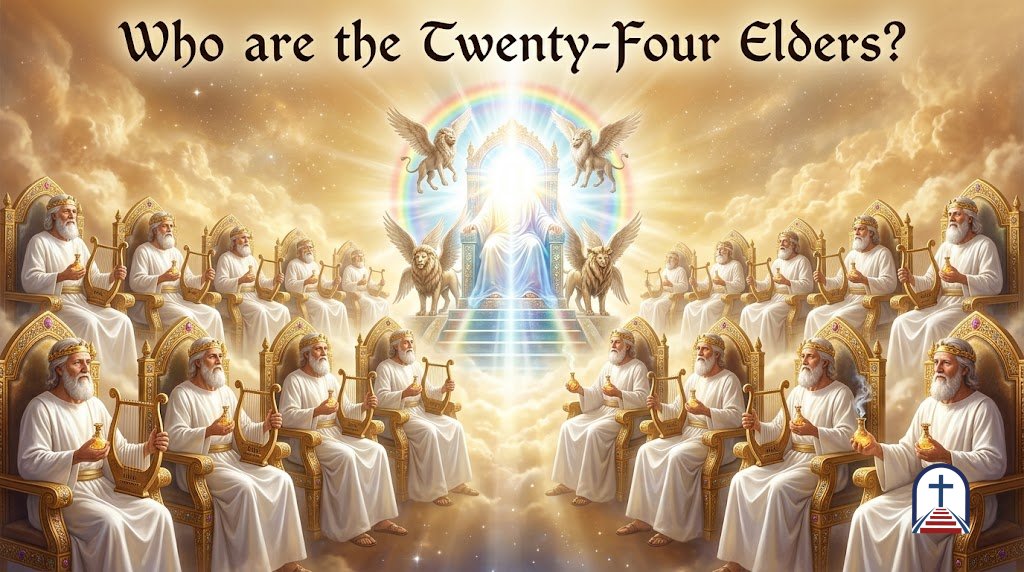
“And round about the throne were four and twenty seats: and upon the seats I saw four and twenty elders sitting, clothed in white raiment; and they had on their heads crowns of gold.” — Revelation 4:4
A biblically based definition of the Twenty-Four Elders is a distinguished group of exalted beings seated on thrones immediately surrounding the central throne of God in heaven. While scholars have debated their exact nature for centuries, the most well-supported biblical view is that they serve as the glorified representatives of the redeemed people of God—encompassing both the Old Testament saints and the New Testament Church. They are perpetually engaged in worship, holding the prayers of the saints, and casting their crowns before the Lord in complete submission to His sovereignty.
Continuing Our Journey Through the Spirit World
In our ongoing discipleship series exploring the unseen spiritual realm, we have navigated through the ranks of angelic beings—the Archangels, the burning Seraphim, the guarding Cherubim, and the Four Living Creatures. Now, as we gaze into the throne room of heaven as revealed to the Apostle John, we encounter a group that looks remarkably different from the angelic host: the Twenty-Four Elders.
For a growing Christian disciple, studying the Twenty-Four Elders is deeply encouraging. Unlike the angels who were created as heavenly spirits, the elders reflect the ultimate destiny of human believers. Understanding their identity and function bridges the gap between our current earthly struggles and our future heavenly reality, reminding us of the glorious inheritance that awaits those who are in Christ Jesus.
The Identity and Appearance of the Twenty-Four Elders
The Book of Revelation provides a stunning visual description of these elders. Every detail of their appearance is laden with theological significance, pointing to their identity and the grace they have received from God.
Representatives of the Redeemed
The number twenty-four is highly symbolic in Scripture. In the Old Testament, King David organized the Levitical priesthood into twenty-four courses (or divisions) to represent and serve on behalf of the entire nation of Israel in the temple (1 Chronicles 24:4). Similarly, the twenty-four elders likely represent the entirety of God’s redeemed people. This is often understood as the sum of the twelve patriarchs of Israel (representing the Old Covenant saints) and the twelve apostles of the Lamb (representing the New Covenant Church). Together, they form a complete picture of the redeemed from every era of human history.
Clothed in White Raiment
John notes that the elders are “clothed in white raiment” (Revelation 4:4). Throughout the Book of Revelation, white robes are consistently promised to and worn by overcoming believers. They represent the imputed righteousness of Jesus Christ and the purity of the saints who have been washed in the blood of the Lamb. Angels are sometimes seen in white, but the specific term “raiment” or “robes” in this context heavily emphasizes the justified status of the redeemed Church.
Seated on Thrones with Crowns of Gold
The elders are seated on “seats” (thrones) and wear “crowns of gold.” The Greek word used for their crowns is stephanos, which refers to the victor’s crown given to those who have successfully completed a race or overcome a great trial. Scripture never promises thrones and victor’s crowns to angels; rather, these are specific rewards promised to faithful believers. Jesus promised, “To him that overcometh will I grant to sit with me in my throne” (Revelation 3:21). The elders reigning on thrones with golden crowns vividly demonstrate the fulfillment of God’s promise to glorify His children and grant them co-regency with Christ in His kingdom.
The Functions of the Twenty-Four Elders
The Twenty-Four Elders are not idle in heaven. They are actively engaged in serving, worshipping, and participating in the divine administration of God’s eternal kingdom.
1. Ceaseless Worship and Adoration
The primary function of the elders is the unrestrained, continuous worship of the Creator and the Redeemer. Whenever the Four Living Creatures give glory to God, the twenty-four elders leave their thrones. Revelation 4:10-11 says, “The four and twenty elders fall down before him that sat on the throne, and worship him that liveth for ever and ever, and cast their crowns before the throne, saying, Thou art worthy, O Lord, to receive glory and honour and power: for thou hast created all things, and for thy pleasure they are and were created.” By casting their crowns before God, they visually acknowledge that any victory they achieved on earth was entirely due to His grace and power.
2. Offering the Prayers of the Saints
In Revelation 5:8, John observes a deeply moving scene: “the four and twenty elders fell down before the Lamb, having every one of them harps, and golden vials full of odours, which are the prayers of saints.” The elders act as a royal priesthood. The harps represent their role in heavenly praise, while the golden vials of incense represent the prayers of God’s people on earth. They hold these prayers before the Lamb, showing that the cries of believers are precious to God, preserved in heaven, and integral to the unfolding of His divine will.
3. Participating in the Divine Council
The elders also appear to function as a divine council, interacting with John and explaining heavenly realities to him. In Revelation 7:13-14, one of the elders asks John about the identity of the great multitude in white robes. When John defers to him, the elder explains that they are those who came out of great tribulation. This interaction demonstrates that the elders possess spiritual wisdom and insight into God’s eschatological (end-times) plans.
The Importance of Knowing This for a Growing Disciple
Why is it essential for a disciple of Jesus Christ to understand the Twenty-Four Elders? The theological truths embedded in their existence have profound practical implications for our daily walk with God.
- It Provides Assurance of Our Eternal Destiny: The Christian journey is often fraught with trials, persecution, and suffering. Seeing the elders seated, crowned, and clothed in white offers immense hope. It is a prophetic guarantee that our current struggles are not in vain. The grand narrative of redemption ends with God’s people glorified and dwelling in perfect fellowship with Him.
- It Elevates the Importance of Prayer: Knowing that the elders hold the prayers of the saints in golden vials changes how we view our prayer life. Our prayers are not empty words echoing in the void; they are fragrant incense presented continually before the throne of God. This should motivate us to pray without ceasing and trust that God hears every petition.
- It Shapes Our Posture of Worship: The elders show us what true worship looks like. Even though they are exalted and crowned, they do not hesitate to fall on their faces and cast their crowns before the Lord. As disciples, we must adopt this same posture of humility, recognizing that everything we have is a gift of God’s grace, and He alone is worthy of all glory.
Next Steps for Your Discipleship Journey
To practically apply this knowledge and continue growing in your faith, consider taking the following steps this week using your S.T.E.P.S. resources:
- Review Your THEOLOGY Assessment: Revisit the section on “Eschatology (Last Things)” (Topic 8). Meditate on the promise of the New Creation and how the Twenty-Four Elders preview the eternal state of believers in God’s restored kingdom.
- Engage with Your EQUIP Assessment: Focus on the “Prayer and Worship” section (Topic 9). Reflect on the elders holding the golden vials of incense. Commit to a dedicated time of prayer this week, knowing your prayers are cherished in heaven.
- Deepen Your PRACTICE of Worship: Read Revelation chapters 4 and 5 in their entirety. Use the songs of the elders as a framework for your own personal worship time, practicing the act of metaphorically “casting your crowns” (surrendering your achievements and pride) before Jesus.