
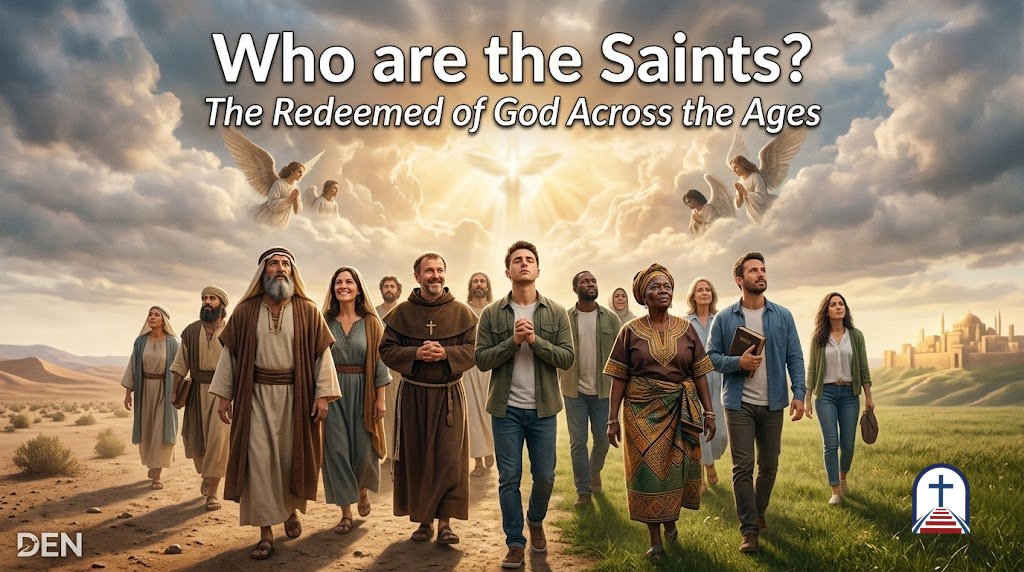
Who are the Saints?
The Redeemed of God Across the Ages
“Unto the church of God which is at Corinth, to them that are sanctified in Christ Jesus, called to be saints, with all that in every place call upon the name of Jesus Christ our Lord, both theirs and ours.” — 1 Corinthians 1:2
A biblically based definition of a “saint” is not a uniquely perfect Christian who has achieved a sinless state, nor is it merely a historical figure canonized by human religious institutions. Rather, a saint is any individual who has been redeemed by the blood of Jesus Christ, justified by grace through faith, and set apart by God for His holy purposes. The word translated as “saint” in the Scriptures originates from root words meaning “holy” or “set apart.” Therefore, to be a saint is to be exclusively designated as God’s own treasured possession, called out of the darkness of sin and into the glorious light of His eternal kingdom.
Expanding Our Understanding of the Redeemed
In our ongoing Spirit World series, we have journeyed through the majestic nature of the Triune God, exploring the sovereignty of the Father, the redemptive mediation of the Son, and the indwelling power of the Holy Spirit. Now, we turn our theological lens toward humanity’s place in God’s grand narrative of redemption: Who are the saints?
For a growing Christian disciple, establishing a biblical understanding of “the saints” is crucial. It defines our identity, shapes our community, and anchors our eternal hope. The Bible speaks of saints in two primary contexts corresponding to God’s unfolding covenants: the Old Testament Saints under the Old Covenant, and the New Testament Saints who comprise the Church under the New Covenant.
Old Testament Saints: Faith Under the Old Covenant
When we read the Old Testament, we encounter men and women who were deeply flawed yet profoundly devoted to God. These are the Old Testament saints. They lived under the Old Covenant, a system characterized by the Law, the priesthood, and the sacrificial system, which served as a shadow of the ultimate reality found in Christ.
To understand the Old Testament saints, we must recognize their distinguishing theological traits:
- Saved by Faith Looking Forward: Just like believers today, Old Testament saints were not saved by their works or by perfectly keeping the Law, for all have sinned and come short of the glory of God. They were saved by grace through faith. However, their faith was prospective; they looked forward to the promised Messiah and trusted in God’s future provision for sin.
- The Sacrificial Shadow: The animal sacrifices they offered could not permanently take away sins, but they demonstrated faith in God’s covenant and pointed to the ultimate sacrifice of the coming Lamb of God.
- The Promise of the Kingdom: The Old Testament saints held fast to the covenants made with Abraham, Moses, and David. They anticipated the coming of a King who would establish righteousness and restore God’s creation. They were pilgrims on the earth, seeking a heavenly country.
Men like Abraham, Moses, and David, and women like Sarah, Ruth, and Esther, were not perfect, but their faith was counted unto them for righteousness. They were the faithful remnant, set apart by God to bear witness to His name among the pagan nations.
New Testament Saints: The Church and the Bride of Christ
With the incarnation, death, and resurrection of Jesus Christ, a profound shift occurred in redemptive history. Christ instituted the New Covenant through His shed blood. Under this New Covenant, the definition of a saint expands into a glorious mystery revealed: the Church.
The New Testament saints possess distinct privileges and a unique corporate identity:
- Saved by Faith Looking Backward: Unlike the Old Testament saints who anticipated the cross, New Testament saints look back at the finished work of Jesus Christ. We possess the full revelation of the Gospel. We are saved by grace alone, through faith alone, in Christ alone.
- The Indwelling of the Holy Spirit: One of the most magnificent distinctions of the New Testament saint is the permanent indwelling of the Holy Spirit. While the Spirit empowered individuals for specific tasks in the Old Testament, He now takes up residence in the heart of every believer, sealing them for the day of redemption and empowering them for holy living.
- The Body and Bride of Christ: New Testament saints are not merely individual believers; they are organically united into a single spiritual entity known as the Church. The Scriptures declare that we are the body of Christ and members in particular. Furthermore, the Church is beautifully depicted as the Bride of Christ, being purified and prepared for the great marriage supper of the Lamb.
- A Royal Priesthood: Under the Old Covenant, a select tribe served as priests. Under the New Covenant, every single saint is a priest, granted direct access to the throne of grace through the sole mediation of Jesus Christ. We are called to offer spiritual sacrifices of praise and thanksgiving.
The Theological Journey of a Saint
Whether under the Old Covenant or the New Covenant, the life of a saint is marked by a definitive theological journey orchestrated by the Triune God. As a growing disciple, you must understand these three pillars of the saint’s experience:
1. Justification (The Past Reality)
The moment a person places their faith in Jesus Christ, they are justified. This is a legal declaration by God where the righteousness of Christ is imputed to the sinner, and the penalty for their sin is fully satisfied. To be a saint means that your condemnation is gone, and you stand perfectly acceptable before God the Father.
2. Sanctification (The Present Process)
While justification is an instantaneous event, sanctification is the lifelong process of becoming functionally holy. It is the work of the Holy Spirit conforming the saint into the image of Christ. Saints are called to put off the old self and put on the new, yielding the fruit of the Spirit in their daily lives.
3. Glorification (The Future Hope)
The journey of the saint does not end in death. Christianity teaches that Jesus will return, the dead will be resurrected, and the final judgment will occur. Glorification is the future reality where the saint will be entirely freed from the presence and power of sin, receiving a resurrected, imperishable body to dwell with God in the new heaven and new earth forever.
Why Knowing This is Essential for Discipleship
Why must a growing disciple grasp the biblical definition of a saint? Because a distorted view of identity leads to a distorted Christian life.
- It Anchors Your Identity:
If you view a “saint” as a spiritual elite, you will either fall into pride if you think you have achieved it, or despair if you know you fall short. Recognizing that you are a saint by virtue of Christ’s work, not your own, anchors your identity in grace. It frees you from the burden of performance and motivates you to live a holy life out of gratitude rather than obligation. - It Compels You to True Community:
Saints are not meant to live in isolation. Because you are a member of the body of Christ, you need the Church, and the Church needs you. Understanding the corporate nature of the saints drives you to gather together, considering one another to provoke unto love and to good works, and refusing to forsake the assembling of yourselves together. - It Provides Eternal Perspective:
Knowing that you belong to a historic lineage of redeemed men and women—from Abraham to the early apostles, to the present-day global Church—gives you incredible resilience. It reminds you that this world is not your home, and that you share an eternal inheritance with all the saints in light.
Next Steps: Engaging with Your S.T.E.P.S. Journey
To continue growing in your understanding of what it means to be a saint within the body of Christ, integrate these practical next steps into your discipleship journey this week:
- Evaluate Your THEOLOGY Assessment: Review your S.T.E.P.S. Theology Assessment, paying special attention to the sections on the Doctrine of Salvation (Soteriology) and the Doctrine of the Church (Ecclesiology). Reflect on how your understanding of being saved by grace through faith aligns with your identity as a saint.
- Review Your SHAPE Assessment: As a New Testament saint, you have been given spiritual gifts for the edification of the Church. Look over your SHAPE Assessment (specifically focusing on your Spiritual Gifts profile) and ask the Lord how He wants you to use those gifts to serve your local body of believers.
- Study Essential Doctrines: Turn to the “Essential Christian Doctrines” section in your S.T.E.P.S. manual. Journal your thoughts on the Doctrine of Last Things (Eschatology) and meditate on the future glorification and eternal life promised to all saints.