What Is Sin?
“Whosoever committeth sin transgresseth also the law: for sin is the transgression of the law.” — 1 John 3:4
A biblically based definition of sin begins with this foundational truth. Scripturally, sin is not merely a list of bad behaviors, cultural faux pas, or a slip of judgment. According to the Bible, it is a concrete spiritual reality—the deliberate transgression (meaning the crossing of a clearly defined boundary) of God’s holy standard, and the tragic iniquity (or crookedness) of a human heart bent toward self-rule. True biblical sin is a personal declaration of independence from our Creator, choosing to rely on our own desires rather than the perfect nature, character, and commands of God. It is the devastating condition that disrupts our relationship with the Father and makes the redemptive work of Jesus Christ absolutely necessary.
“The gravity of sin is not measured by our comfort, but by the ultimate cost of its cure: the cross of Christ.”
In our modern culture, the word “sin” has largely been stripped of its gravity. We use it to describe a cheat meal on a diet (“that chocolate cake was sinful”) or as a playful marketing term for a weekend getaway to “Sin City.” Even within many churches, the topic is often avoided or softened because it feels uncomfortable, outdated, or overly judgmental.
Yet, if we look at the fabric of our world, we can all agree that something is deeply broken. We see it in global conflicts, broken families, systemic injustice, and the quiet internal battles we fight against our own worst impulses.
The Bible has a name for this universal brokenness, and it is sin.
To grow as a disciple of Jesus, we cannot bypass this topic. We cannot fully appreciate the beauty of the Gospel, the depth of God’s grace, or the necessity of the cross until we understand the true nature of the disease that made the cross necessary.
Let’s pull up a chair in the Study DEN, clear away the cultural noise, and look at exactly what the Bible means when it answers the question: What is sin?
1. The Biblical Anatomy of Sin: More Than Just “Bad Behavior”
Many people view sin purely as a list of forbidden actions—like lying, stealing, or murder. While those actions are certainly sinful, the biblical definition goes much deeper. Sin is not just what we do; it is a condition of the human heart.
The writers of Scripture used several distinct Greek and Hebrew words to capture the full picture of sin. When we study these words, we see that sin operates in three primary ways:
-
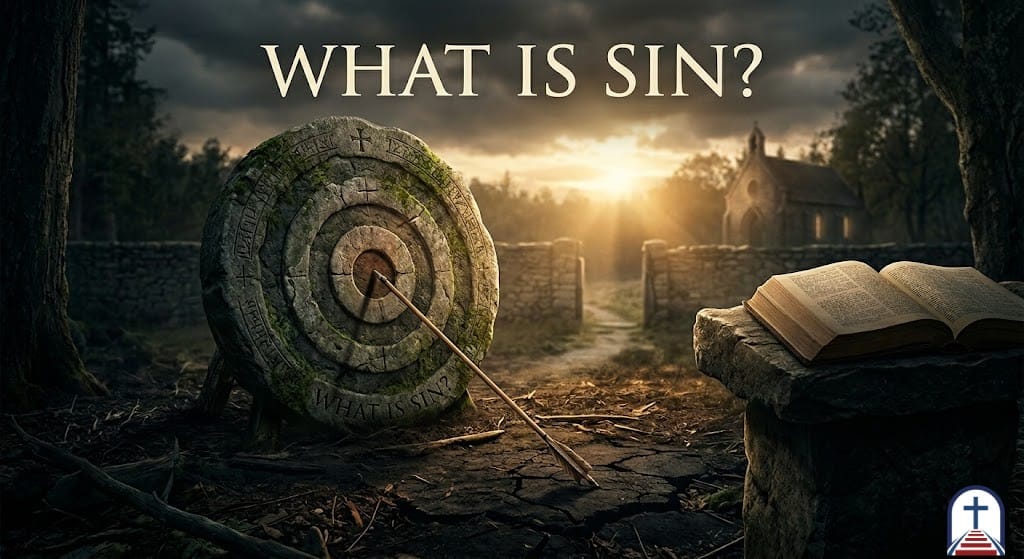
Missing the Mark (Hamartia): This is the most common word for sin in the New Testament. It is an archery term that means to shoot an arrow and miss the target. God’s standard for humanity is absolute perfection and holiness (Matthew 5:48). Whenever we fall short of His perfect character, we “miss the mark.”
-
Transgression (Parabasis): This means to cross a clearly defined boundary. If a sign says “Do Not Trespass” and you step over the line anyway, you have committed a transgression. It is a deliberate choice to violate a known law of God.
-
Iniquity (Avon): This Hebrew term refers to perversity, crookedness, or a twisted moral condition. It speaks to our internal bent toward selfishness. It is the reality that our natural inclinations are warped out of alignment with God’s design.
To summarize the biblical view: Sin is any failure to conform to the moral law of God in our actions, our attitudes, or our nature. It is a declaration of independence from our Creator, a quiet (or loud) rebellion where we choose to rule our own lives instead of letting God rule them.
2. Omission vs. Commission: The Two Sides of Sin
To understand the full scope of sin, theologians generally divide it into two categories based on how it manifests in our daily lives.
Sins of Commission
These are the sins we actively commit. They occur when we do, think, or say something that God has expressly forbidden.
-
Examples: Gossiping about a coworker, harboring lustful thoughts, acting out in anger, or engaging in dishonesty.
Sins of Omission
These are the sins we commit by failing to do what is right. They occur when we know the good God wants us to do, but we choose not to do it. The Apostle James defines this clearly: “If anyone, then, knows the good they ought to do and doesn’t do it, it is sin for them” (James 4:17).
-
Examples: Ignoring someone in desperate need, withholding forgiveness, neglecting your daily prayer and study time, or remaining silent when you have an opportunity to share the Gospel.
3. The Devastating Consequences of Sin
Sin is not a victimless crime. God hates sin not because He is a cosmic tyrant who wants to ruin our fun, but because He loves us and knows that sin is inherently destructive to everything it touches.
Scripture outlines three major consequences of the sin problem:
-
Relational Separation from God: God is completely holy, and sin cannot exist in His presence. Isaiah 59:2 tells us, “But your iniquities have separated you from your God; your sins have hidden his face from you.” Without a savior, sin cuts us off from the source of life.
-
Warped Human Nature: Ever since the Fall of Adam in Genesis 3, every human being is born with an inherited sin nature (Romans 5:12). This theological reality, sometimes called Total Depravity, means that every part of our being—our minds, our emotions, and our wills—has been corrupted by sin. We are not basically good people who occasionally do bad things; we have a deeply rooted spiritual sickness.
-
Spiritual and Physical Death: The ultimate paycheck of sin is death. Romans 6:23 states plainly, “For the wages of sin is death.” This includes physical death, but more terribly, eternal spiritual death—separation from God forever in hell.
4. The Solution: The Gospel of Grace
If the story ended there, humanity would be completely hopeless. We cannot fix our own sin problem. No amount of good deeds, church attendance, or self-improvement can wash away a single sin.
This is where the beauty of the Theology step in our discipleship journey becomes vibrant.
God looked at our helpless condition and did for us what we could never do for ourselves. He sent Jesus Christ to live the perfect life we failed to live, shooting an arrow that hit the mark perfectly. Then, Jesus went to the cross and willingly paid our “wages.” He took the death sentence that our sins earned and gave us His righteousness in return (2 Corinthians 5:21).
When a disciple repents of their sin and trusts in Christ, the legal penalty of sin is broken. While we still battle the presence of sin in this life, we are completely delivered from its power and its penalty.
Next Steps: Examine Your Heart
A major milestone of a growing disciple is moving from a general acknowledgment of sin (“Yeah, I know I’m a sinner”) to a specific, active pursuit of holiness. This means letting the Holy Spirit shine a light into the dark corners of our daily habits, relationships, and motivations.
If you are tired of struggling with the same cyclical behaviors and want to evaluate where you stand in your daily pursuit of purity and Christlikeness, it’s time to take an intentional next step.
Step Into the Toolshed: True spiritual maturity requires the courage to look in the mirror. If you want to evaluate your current habits, identify spiritual blind spots, and see how well you are putting off old sinful patterns to put on the character of Christ, we invite you to use our personal evaluation tools.
Take our free S.T.E.P.S. Practice Inventory today. This specific assessment will give you an honest look at your daily devotional life and your practice of personal holiness—helping you clear out the clutter so you can walk in total freedom and power.