Who is God the Son?
The Word Made Flesh and Redeemer of Humanity
“In the beginning was the Word, and the Word was with God, and the Word was God… And the Word was made flesh, and dwelt among us, (and we beheld his glory, the glory as of the only begotten of the Father,) full of grace and truth.” — John 1:1, 14
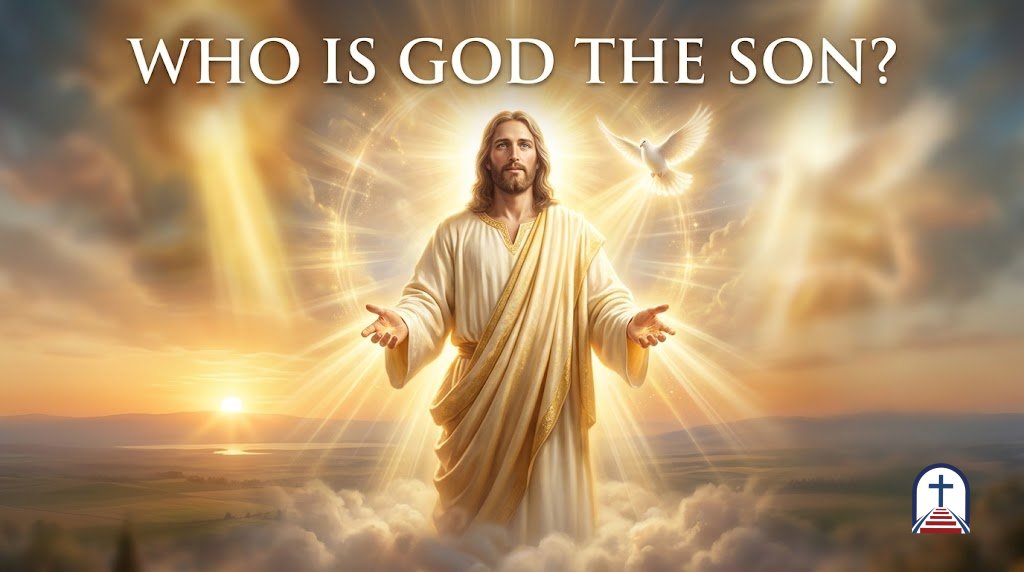
A biblically based definition of God the Son is that He is the second person of the eternal Trinity, sharing the exact divine essence with the Father and the Holy Spirit, who at the appointed time in history took on human flesh in the person of Jesus Christ. He is the eternal Word, the promised Messiah, and the sole mediator between God and humanity, who accomplished the redemption of the world through His sinless life, substitutionary death on the cross, and victorious resurrection.
“God the Son is the eternally begotten exact representation of the Father’s nature, who willingly humbled Himself to become fully human without ceasing to be fully God, so that through His sacrificial death and resurrection, He might conquer sin and death and reconcile humanity to God.”
Advancing Our Study of the Godhead
In our ongoing series exploring the spirit world, we recently transitioned to an in-depth study of the Supreme Being who reigns over all principalities, powers, angels, and demons. Having established the foundational doctrine of the Triune Creator and having intimately explored the majestic sovereignty of God the Father, we now turn our attention to the second person of the Trinity: God the Son.
For a growing Christian disciple, establishing a sound “Christology”—the study of the person and work of Jesus Christ—is not merely an academic exercise; it is the very hinge upon which our entire faith swings. To misunderstand the Son is to misunderstand the Gospel itself.
What Distinguishes God the Son?
While the Father, the Son, and the Holy Spirit are one God, co-equal in power and glory, they possess distinct personal properties and fulfill distinct roles in the divine economy.
To understand God the Son uniquely, we must recognize what sets His personhood apart within the Trinity:
- Eternally Begotten: Unlike the Father, who is unbegotten, the Son is eternally begotten of the Father. This does not mean He was created or had a beginning; rather, it describes His eternal, relational derivation from the Father, full of grace and truth (John 1:14).
- The Incarnation (The Hypostatic Union): God the Son is the only person of the Trinity to become flesh. The Father did not become a man, nor did the Holy Spirit. The Son alone added humanity to His divinity, becoming perfectly fully God and fully man in one undivided person forever (Philippians 2:5-11).
- The Mediator and Redeemer: While the Father planned salvation and the Spirit applies it, it was God the Son who actually accomplished the work of redemption on the cross. He alone is the mediator of the New Covenant between God and mankind (1 Timothy 2:5).
The Theological Traits and Biblical Evidence of the Son
As disciples, we must ground our understanding of Jesus Christ firmly in the revelation of Scripture. The Bible presents the Son with distinct theological traits that demand our worship and allegiance.
- He is Fully Divine
Jesus Christ is not merely a good moral teacher or a highly exalted angel; He is the Creator of the universe. The Apostle Paul writes in Colossians 1:16, “For by him were all things created, that are in heaven, and that are in earth, visible and invisible, whether they be thrones, or dominions, or principalities, or powers: all things were created by him, and for him”. He possesses all the divine attributes, forgiving sins and accepting the worship that belongs to God alone.
- He is Fully Human
To save humanity, the Son had to become one of us. He was born of a virgin (Matthew 1:18-25), experienced hunger, wept, suffered, and bled. His humanity was essential for Him to serve as our sympathetic High Priest and as the spotless lamb who could substitute Himself in our place to fulfill the righteous requirements of the law.
- The Atoning Sacrifice and Victorious Lord
The climax of the Son’s earthly ministry was His atoning death and resurrection. Romans 5:8 declares, “But God commendeth his love toward us, in that, while we were yet sinners, Christ died for us”. Through His crucifixion, He fulfilled the Old Testament sacrificial system, and through His bodily resurrection, He conquered sin, death, and the demonic realm, validating His divine mission (1 Corinthians 15:3-4).
Why Knowing the Son is Essential for Discipleship
Why must a disciple be deeply grounded in the doctrine of God the Son? The Theology section of the S.T.E.P.S. of Discipleship makes it clear that the redemptive work of Christ is the central message of the entire Bible.
- It is the Basis of Our Salvation:
Salvation is found in no one else. We are saved by grace through faith in Christ alone, not by our own works (Ephesians 2:8-9). Recognizing that Jesus is both Lord and Savior is the singular requirement for eternal life (Romans 10:9). - It Defines Our Union with Christ:
Christian discipleship is not merely about behavior modification; it is about “Union with Christ”. Because the Son became human, died, and rose again, believers are now reconciled to God and made new creatures (2 Corinthians 5:17). We are called to live our lives deeply connected to Him, as He is the vine and we are the branches. - It Shapes Our Ethics and Mission:
Jesus Christ is the ultimate example of submission to the Father and sacrificial love for others. Understanding His humility (Philippians 2:5-11) directly shapes Christian ethics, compelling us to live in faith, obedience, and love for God and our neighbors (Colossians 3:12-17). Furthermore, His supreme authority is the basis for the Great Commission, driving us to make disciples of all nations (Matthew 28:18-20).
Next Steps: Engaging with Your S.T.E.P.S. Journey
To continue growing in your intimate knowledge of God the Son, integrate these practical next steps into your discipleship journey this week:
- Evaluate Your THEOLOGY Assessment: Review your S.T.E.P.S. Theology Assessment, paying special attention to your understanding of Christ’s divinity, humanity, and atoning work. Can you articulate how Jesus fulfills the Old Testament prophecies?
- Study Christology: Turn to the “What Every Christian Should Know: Jesus Christ and Salvation” section in your S.T.E.P.S. manual. Look up and journal about the essential verses provided, specifically Philippians 2:5-11 and Hebrews 10:1-18, reflecting on His sacrifice.
- Meditate on the Gospels: Commit to reading one chapter of the Gospel of John each day this week. As you read, write down every instance where Jesus reveals His divine nature and His absolute submission to the Father’s will.