Who is the Angel of the Lord?
The Pre-Incarnate Christ
“And the angel of the Lord appeared unto him in a flame of fire out of the midst of a bush: and he looked, and, behold, the bush burned with fire, and the bush was not consumed.” — Exodus 3:2
A biblically based theological definition of “the Angel of the Lord” in the Old Testament is that this specific figure is a “Christophany“—a pre-incarnate appearance of Jesus Christ, the second person of the Trinity, before His physical birth in Bethlehem. Unlike regular created angels who refuse worship and act merely as messengers or warriors, the Angel of the Lord speaks as God, claims the authority of God, receives the worship of God, and is explicitly identified as God by those who encounter Him. He is the visible manifestation of the invisible God, actively engaged in the redemptive history of humanity long before the New Testament era.
Continuing Our Journey Through the Spirit World
In our comprehensive discipleship series exploring the unseen spiritual realm, we will ascend to the heavenly throne to observe the worship of the Seraphim and Cherubim, and we will examine the specific roles of created beings like Warrior Angels, Guardian Angels, and Messenger Angels. We will established that angels are created, ministering spirits deployed by God to serve the heirs of salvation.
However, as a growing Christian disciple, you will encounter a unique phrase in your Old Testament reading: “the Angel of the Lord.” It is vital to distinguish between “an” angel of the Lord (a created messenger) and “the” Angel of the Lord (a divine person). Understanding the identity and function of this magnificent being is not merely an academic exercise; it is a profound journey into the eternal nature of Jesus Christ and His relentless, loving pursuit of humanity throughout all of biblical history.
The Nature and Biblical Concept of the Angel of the Lord
To understand this unique figure, we must first look at the word “angel.” In both the Old Testament Hebrew (malak) and the New Testament Greek (angelos), the word simply means “messenger” or “sent one.” Therefore, the title “Angel of the Lord” literally translates to the “Messenger of Yahweh.”
The core theological trait of the Angel of the Lord is His divine identity. When created angels appear to humans—such as Gabriel or Michael—they strictly forbid humans from worshipping them, pointing all glory back to God (Revelation 22:8-9). However, the Angel of the Lord readily accepts worship, forgives sins, and makes covenantal promises that only God can make. This perfectly aligns with the Christology we find in the New Testament, where Jesus is described as the eternal Word who was with God and was God (John 1:1), and the image of the invisible God (Colossians 1:15).
Because God the Father is invisible and “no man hath seen God at any time” (John 1:18), the physical manifestations of God in the Old Testament are understood by orthodox Christian scholars to be appearances of God the Son—the pre-incarnate Jesus Christ—acting as the ultimate Messenger of the Father’s will.
History and Key Encounters in the Old Testament
The Angel of the Lord appears at critical, redemptive moments in the Old Testament to protect, guide, and establish God’s covenant with His people.
Comforting Hagar in the Wilderness
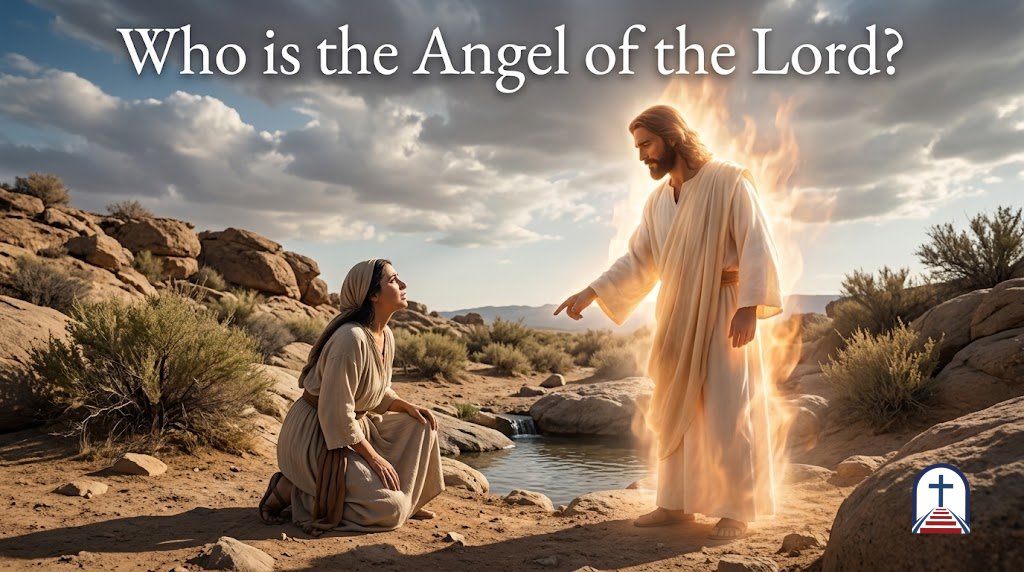
The first explicit mention of the Angel of the Lord occurs in Genesis 16. Hagar, the Egyptian maidservant of Sarah, fled into the wilderness to escape harsh treatment. The Angel of the Lord found her by a spring of water, instructed her to return, and promised to multiply her descendants. Recognizing the divine nature of this encounter, Hagar called the name of the Lord who spoke to her, “Thou God seest me” (Genesis 16:13). She understood that the messenger was God Himself.
The Provision for Abraham and Isaac
In Genesis 22, God tests Abraham by commanding him to sacrifice his son, Isaac. As Abraham raised the knife, “the angel of the Lord called unto him out of heaven, and said, Abraham, Abraham… lay not thine hand upon the lad… for now I know that thou fearest God, seeing thou hast not withheld thy son, thine only son from me” (Genesis 22:11-12). Notice the shift in pronouns: the Angel of the Lord speaks on behalf of God, yet identifies Himself as the one to whom the sacrifice was being offered. The Angel then swears by Himself (a privilege reserved only for God) to bless Abraham.
Moses at the Burning Bush
One of the most famous encounters is in Exodus 3. The Angel of the Lord appeared to Moses in the flames of the burning bush. Yet, as the narrative progresses, the text states, “And when the Lord saw that he turned aside to see, God called unto him out of the midst of the bush” (Exodus 3:4). The Angel of the Lord reveals His ultimate name: “I AM THAT I AM” (Exodus 3:14). Jesus later claimed this exact divine title for Himself in John 8:58, saying, “Before Abraham was, I am,” cementing His identity as the one in the bush.
Commissioning Gideon
During a time of severe oppression by the Midianites, the Angel of the Lord appeared to a fearful man named Gideon, who was hiding in a winepress. The Angel declared, “The Lord is with thee, thou mighty man of valour” (Judges 6:12). Throughout the conversation, the text interchanges “the Angel of the Lord” and simply “the Lord.” Gideon eventually realizes he has seen God face to face and fears for his life, but the Lord comforts him with peace.
The Disappearance of the Angel of the Lord
It is deeply significant that once the New Testament begins and Jesus Christ is born of the Virgin Mary, the specific title “the Angel of the Lord” (referring to this unique, divine figure) disappears. Created angels still appear, but the divine Messenger no longer takes temporary physical forms. Why? Because the Word became flesh and dwelt among us permanently (John 1:14). The pre-incarnate Christ who temporarily appeared in the Old Testament permanently took on human nature in the New Testament to suffer, die, and rise again for our salvation.
The Importance of Knowing This for a Growing Disciple
Why is it crucial for a disciple to understand the theology of the Angel of the Lord? This knowledge transforms your reading of Scripture and deepens your awe of Christ in several ways:
- It Magnifies the Eternal Nature of Jesus: Jesus did not begin to exist in the manger at Bethlehem. Recognizing Him as the Angel of the Lord reinforces the vital doctrine of the Trinity and Christ’s eternal divinity. He is the Alpha and the Omega, actively shepherding His people from the very beginning of time.
- It Unifies the Bible: Understanding Christophanies bridges the Old and New Testaments. You will no longer view the Old Testament as a book simply about an angry God and the New Testament as a book about a loving Jesus. You will see the same compassionate, redeeming Jesus rescuing Hagar, protecting Isaac, delivering Israel, and ultimately dying on the cross.
- It Cultivates Deep Worship: Knowing that the Creator of the universe stepped into human history time and time again to comfort the broken, guide the lost, and save the condemned should drive every disciple to profound worship. He is the God who sees us, just as He saw Hagar in the wilderness.
Next Steps for Your Discipleship Journey
To practically apply this knowledge and continue growing in your faith, consider taking the following steps this week using your S.T.E.P.S. resources:
- Review Your THEOLOGY Assessment: Revisit the lessons on “Essential Doctrines” and “God’s Nature.” Ensure you can confidently explain the doctrine of the Trinity and the eternal nature of Jesus Christ (Colossians 1:15-20).
- Deepen Your Bible Study PRACTICE: As you read the Old Testament, practice identifying the grand narrative of Redemption. Look for how God the Son is actively involved in the major events and covenants long before His physical incarnation.
- Engage with Your SHAPE Inventory: Just as the Angel of the Lord intentionally sought out and commissioned unlikely people like Gideon for specific tasks, God has uniquely shaped you for a purpose. Review your spiritual gifts and consider how God is calling you to step out in faith as a “mighty person of valor” in your own sphere of influence.