What are the Ophanim?
The Chariot Wheels of God’s Throne
“Now as I beheld the living creatures, behold one wheel upon the earth by the living creatures, with his four faces. The appearance of the wheels and their work was like unto the colour of a beryl: and they four had one likeness: and their appearance and their work was as it were a wheel in the middle of a wheel.” — Ezekiel 1:15-16
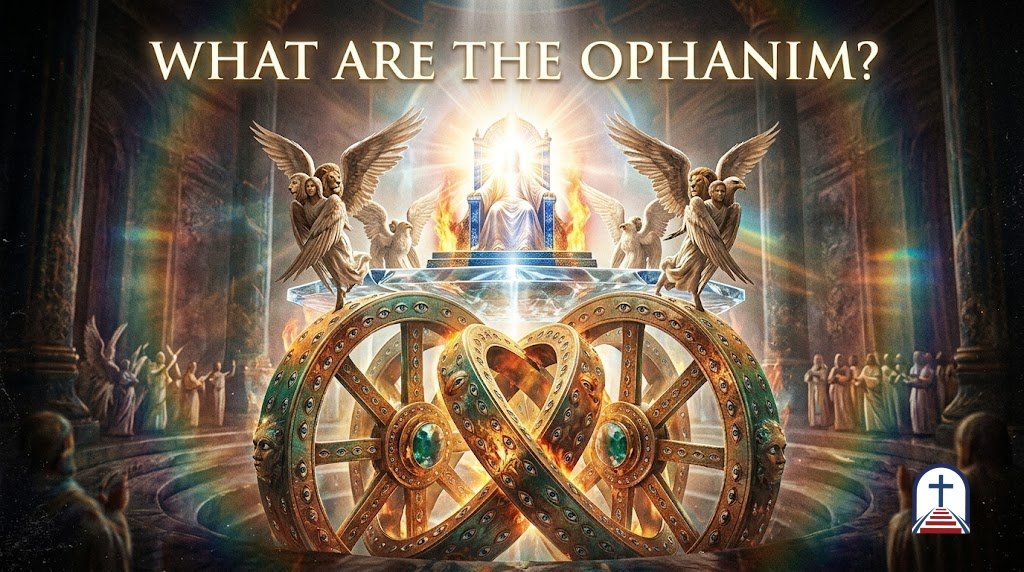
A biblically based theological definition of the Ophanim (Hebrew for “wheels”) is that they are either a unique class of celestial beings or living divine constructs that form the chariot-throne of God. Described intricately in the visionary experiences of the prophet Ezekiel, the Ophanim are characterized by their appearance as interlocking wheels covered in eyes. They are perpetually associated with the Cherubim and the Four Living Creatures, moving in perfect, instantaneous harmony with the Spirit of God to carry the divine throne wherever the Lord wills.
Continuing Our Journey Through the Spirit World
In our ongoing discipleship series exploring the unseen spiritual realm, we have ascended to the heavenly throne room to observe the magnificent worship and divine administration of the Seraphim, Cherubim, the Four Living Creatures, and the Twenty-Four Elders. We have also explored the overarching might of God’s Warrior Angels, the messages delivered by Messenger Angels, the oversight of Guardian Angels, and the justice of Destroying Angels.
As we continue to build our biblical theology of the spiritual realm, we encounter a mystery that stretches the limits of human language: the Ophanim. Often referred to simply as the “Wheels,” these entities are a profound testament to the unsearchable majesty, omniscience, and omnipresence of God.
The Nature and Description of the Ophanim
When the prophet Ezekiel was in exile by the river Chebar, the heavens were opened to him, and he received a vision of the glory of God. In this vision, he did not just see angels in human form; he saw a divine chariot (the Merkabah) accompanied by terrifyingly beautiful living creatures and the mysterious Ophanim.
According to the biblical text, the Ophanim possess several distinct and awe-inspiring characteristics:
1. Wheels Within Wheels
Ezekiel describes their structure as “a wheel in the middle of a wheel” (Ezekiel 1:16). This interlocking design allowed them to move instantly in any of the four directions without needing to turn. This represents the absolute freedom, agility, and multidirectional awareness of God’s sovereign will in the universe.
2. Covered in Eyes
One of the most striking features of the Ophanim is that their massive rims were “full of eyes round about them four” (Ezekiel 1:18) and their entire bodies, including the wheels, were full of eyes (Ezekiel 10:12). In biblical symbolism, eyes represent knowledge, awareness, and sight. This points directly to the core attribute of God’s omniscience—He sees all things, knows all things, and nothing is hidden from His sight (Psalm 139:1-6).
3. Animated by the Divine Spirit
The Ophanim are not mechanical objects; they are living, spiritual entities. Ezekiel 1:20 reveals, “Whithersoever the spirit was to go, they went, thither was their spirit to go; and the wheels were lifted up over against them: for the spirit of the living creature was in the wheels.” They move in absolute, flawless synchronization with the Cherubim and the Spirit of God. There is no hesitation or rebellion in their movement; they are perfectly submitted to the divine command.
The Theological Significance of the Ophanim
Understanding the Ophanim is not simply an exercise in studying bizarre prophetic imagery; it provides a deep theological foundation regarding the attributes of God .
- Divine Omnipresence: In the ancient world, a king’s throne was stationary, located in a capital city. However, the vision of the Ophanim reveals that God’s throne is mobile. He is not confined to a single temple or geographic location. The wheels indicate that God is omnipresent and can manifest His glory and judgment anywhere in creation at any time.
- Divine Omniscience: The eyes covering the wheels remind us that God’s plan is executed with perfect knowledge. He does not rule blindly; His judgments and movements in history are based on a perfect, comprehensive understanding of all things.
- The Unstoppable Nature of God’s Purpose: The massive, towering size of the wheels (Ezekiel 1:18) and their ability to move over any terrain without turning signifies that God’s redemptive plan—from creation to the cross to the final restoration—is an unstoppable force (Genesis 1-3; Revelation 21-22).
The Importance of Knowing This for a Growing Disciple
Why is it essential for a growing Christian disciple to study such complex prophetic visions as the Ophanim?
- Expanding Our View of God: Modern Christianity often risks reducing God to a overly familiar, casual figure. Studying the terrifying beauty of the Ophanim restores a deep sense of reverence and awe for the Creator, sustainer, and ruler of all things (Genesis 1:1; Matthew 6:9). It reminds us that we serve a holy, transcendent King.
- Finding Comfort in God’s Sovereignty: When the world feels chaotic, the vision of the Ophanim assures us that God is still on His throne, and His throne is moving purposefully through history. His all-seeing eyes are watching over His people, bringing comfort in the knowledge that nothing catches Him by surprise.
- Trusting Biblical Inspiration: Grappling with the deep, apocalyptic literature of the Bible, such as Ezekiel’s visions, reinforces our trust that the Bible is the inspired Word of God (2 Timothy 3:16-17). It challenges us to dig deeper into God’s ultimate authority and guide for our lives.
Next Steps for Your Discipleship Journey
To practically apply this theological knowledge and continue growing in your understanding of the spirit world and God’s nature, take the following steps this week using your S.T.E.P.S. resources:
- Deepen Your THEOLOGY of God’s Attributes: Revisit the Theology section of your materials, specifically focusing on “God’s Nature and Character” (Question 20). Study the attributes of omniscience and omnipresence (Psalm 139:1-6), and meditate on how the vision of the Ophanim beautifully illustrates these truths.
- Enhance Your Bible Study PRACTICE: Read Ezekiel chapters 1 and 10 this week. Apply proper interpretation methods by observing the context (Ezekiel writing to exiles in Babylon) to understand why a vision of a mobile, sovereign God would bring immense hope to a displaced people.
- Engage in Awe-Filled Worship: Let your study of the Ophanim transform your prayer life. Spend time this week in prayers of adoration, focusing solely on praising God for His majesty, power, and the magnificent, unseen reality of His heavenly throne room.