What are the Evil Spirit Beings?
An Introduction to the Forces of Darkness
“Put on the whole armour of God, that ye may be able to stand against the wiles of the devil. For we wrestle not against flesh and blood, but against principalities, against powers, against the rulers of the darkness of this world, against spiritual wickedness in high places.” — Ephesians 6:11-12
A biblically based definition of Evil Spirit Beings encompasses the various ranks and classifications of rebellious, fallen spiritual entities who operate in opposition to God and His kingdom. Led by Satan, these invisible beings are committed to thwarting God’s redemptive plan, deceiving humanity, and causing spiritual, physical, and moral destruction. They are defeated foes through the cross of Jesus Christ, yet they remain active in the present age until their final judgment.
Continuing Our Journey Through the Spirit World
In our ongoing discipleship series exploring the unseen spiritual realm, we have ascended the heavenly hierarchy, marveling at the holy Archangels, the burning Seraphim, the guardian Cherubim, the Four Living Creatures, and the Twenty-Four Elders. However, Scripture paints a comprehensive picture of the spirit world that is not solely composed of beings in joyful submission to God. There is a dark, rebellious faction within the spiritual realm.
As a growing Christian disciple, transitioning our study from the holy angels to the fallen ones is not meant to induce fear, but to equip you for reality. The Bible clearly states that believers are engaged in a daily, unseen spiritual war. Understanding the nature, organization, and tactics of our enemy is a vital component of Christian maturity and victorious living.
The Nature and Function of Evil Spirit Beings
Originally created by God as good and holy beings, a multitude of spirits chose to rebel against their Creator. The Bible indicates that this rebellion was spearheaded by a high-ranking angel, leading a fraction of the heavenly host into permanent apostasy. Because of their rebellion, their nature became utterly corrupted. They are now completely devoid of grace, operating in pride, malice, and deception.
The primary function of these evil spirit beings is twofold: to rebel against God’s sovereign authority and to destroy humanity, which is created in God’s image. They seek to blind the minds of unbelievers to keep them from the Gospel, and they labor tirelessly to tempt, accuse, and hinder the spiritual growth of believers.
The Hierarchy and Types of Evil Spirit Beings
Just as the holy angels have order and ranks, the kingdom of darkness operates with a highly structured hierarchy. The Apostle Paul refers to them as “principalities,” “powers,” and “rulers of the darkness of this world.” Below is an introduction to the specific types and classes of evil spirit beings mentioned in the Bible.
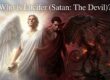
Lucifer (Satan: The Devil)
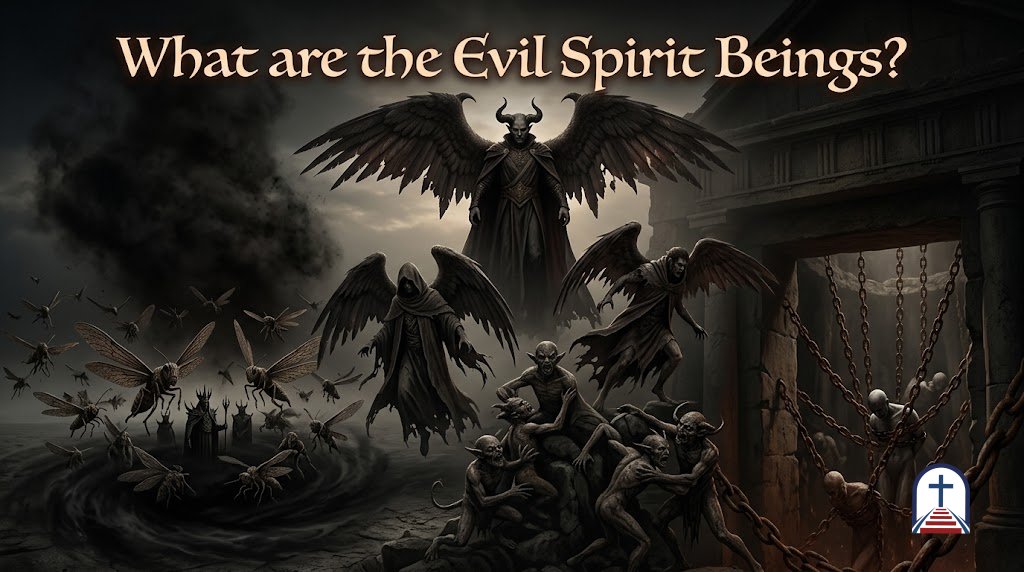
Lucifer, primarily known as Satan (the adversary) or the Devil (the accuser), is the chief opponent in spiritual warfare and the supreme leader of the evil spirit beings. Originally created as a magnificent and powerful angel, pride led to his downfall. He is described as a “roaring lion” walking about and seeking whom he may devour (1 Peter 5:8). His primary weapons are temptation, accusation, and deception. Despite his power, he is a created being with limited authority, and his ultimate defeat was secured by Jesus Christ on the cross.
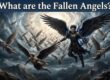
Fallen Angels
Fallen angels are those celestial beings who willingly joined Satan in his primeval rebellion against God. According to Revelation 12:4, a third of the “stars of heaven” (symbolizing angels) were cast down to the earth with the dragon. These fallen angels serve as Satan’s primary emissaries and lieutenants. They possess immense strength, intelligence, and mobility, functioning as the “principalities and powers” that orchestrate systemic evil and influence human governments and cultures away from the truth of God.
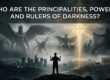
Principalities, Powers, and Rulers of Darkness
While “Fallen Angels” and “Demons” are great broad categories, the Apostle Paul reveals that Satan’s kingdom is not a chaotic mob, but a highly organized military hierarchy. Ephesians 6:12 states, “For we do not wrestle against flesh and blood, but against the rulers, against the authorities, against the cosmic powers over this present darkness, against the spiritual forces of evil in the heavenly places.” Including this as a category explains how evil spirits are ranked and structured to oppose God’s kingdom.
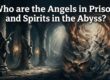
Angels in Prison (Chains of Darkness)
Not all fallen angels are currently active on the earth. The Bible speaks of a specific group of angels who committed such grievous sins—often associated with the events of Noah’s day in Genesis 6—that God immediately judged them. Jude 1:6 states, “And the angels which kept not their first estate, but left their own habitation, he hath reserved in everlasting chains under darkness unto the judgment of the great day.” The Apostle Peter also notes that God cast these angels down to “hell” (the Greek word Tartarus, a deep abyss) to be held until the final judgment. They are currently completely immobilized.
Spirits in the Abyss
The Book of Revelation speaks of a terrifying group of demonic entities currently locked within the “bottomless pit” (the Abyss). In Revelation 9, an angel is given the key to this pit, and upon opening it, a horde of demonic beings described symbolically as “locusts” is released upon the earth to bring judgment and torment during the tribulation period. They are led by a king, the angel of the bottomless pit, whose name in Hebrew is Abaddon, and in Greek, Apollyon (meaning “Destroyer”).
Demons (Unclean Spirits)
Throughout the Gospels, Jesus frequently encounters and casts out “unclean spirits” or demons. While some theological scholars view demons and fallen angels as the same entities, others believe demons are a distinct class of earth-bound spirits, possibly the disembodied spirits of the Nephilim (from Genesis 6). Regardless of their exact origin, demons are characterized by an intense desire to inhabit physical bodies (human or animal). They afflict humanity with physical ailments, mental torment, and severe spiritual bondage. They are completely subject to the authority of Jesus Christ and tremble at His name.
Other Evil Spirits and Titles
While Scripture outlines major hierarchies of dark forces, it also identifies several specific entities and descriptive spirits that operate within Satan’s domain. These include uniquely named figures like Abaddon (the “Destroyer” over the abyss) and Beelzebub (often called the “prince of demons”), as well as terrifying demonic collectives like Legion. Furthermore, the Bible frequently identifies evil spirits not by a proper name, but by the specific sins, lies, or afflictions they promote—such as a spirit of fear, a spirit of jealousy, or the personified principality of greed known as Mammon. Together, these specific names and titles highlight the diverse and specialized tactics the enemy uses to deceive, tempt, and oppress humanity.
The Importance of Knowing This for a Growing Disciple
Why is it crucial for a disciple to study the forces of darkness? While we must never become unbiblically obsessed with evil spirits, willful ignorance is incredibly dangerous.
- It Awakens Us to the Reality of Spiritual Warfare: Recognizing that we are fighting invisible, highly organized spiritual enemies changes how we view our daily struggles. The conflicts in our homes, workplaces, and minds are rarely just flesh-and-blood issues; they often have a spiritual undercurrent.
- It Helps Us Recognize the Enemy’s Schemes: Satan’s tactics are predictable. He uses temptation to draw us into sin, accusations to paralyze us with guilt, and deception to blind us to the truth. When a disciple understands these schemes, they can effectively counter them with the Word of God, just as Jesus did in the wilderness.
- It Magnifies the Victory of Christ: Studying the kingdom of darkness is ultimately a study in Christ’s supremacy. Colossians 2:15 declares that Jesus “spoiled principalities and powers, he made a shew of them openly, triumphing over them in it.” We do not fight for victory; as believers, we fight from the victory already secured by Jesus. Understanding the enemy highlights the immense power and authority delegated to the Church.
Next Steps for Your Discipleship Journey
To prepare yourself for the spiritual battles you will face and to deepen your understanding of these biblical truths, consider these next steps using your S.T.E.P.S. resources:
- Review Your THEOLOGY Assessment: Revisit the section on “Facing Challenges in the Christian Life” (Topic 11). Ensure you have a firm grasp on the doctrine of spiritual warfare and the reality of spiritual opposition.
- Engage with Spiritual Warfare Practices: Study the practical application of the “Armor of God.” Commit to daily putting on the belt of truth, the breastplate of righteousness, the shield of faith, and the sword of the Spirit through intentional prayer and Bible study.
- Practice Fighting with Authority: Review the principles of resting in Christ’s victory. This week, when you face temptation or accusations from the enemy, practice resisting the devil by speaking God’s promises out loud and invoking the name of Jesus.