
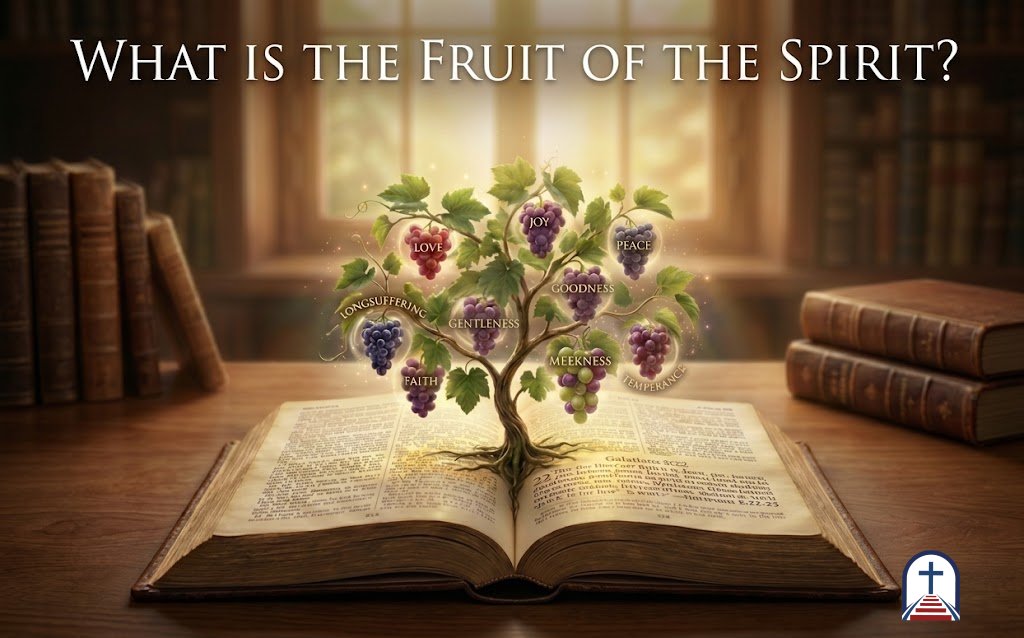
What is the Fruit of the Spirit?
“But the fruit of the Spirit is love, joy, peace, longsuffering, gentleness, goodness, faith, Meekness, temperance: against such there is no law.” — Galatians 5:22-23
A biblically based definition of the “Fruit of the Spirit” begins with understanding that it is the visible, tangible manifestation of a transformed life. Scripturally, the fruit of the Spirit is not a collection of human personality traits achieved through rigorous self-discipline or moral striving; rather, it is the character of Jesus Christ supernaturally produced in a believer by the indwelling Holy Spirit. It serves as the primary evidence that a disciple is actively pursuing personal holiness daily to honor Jesus and is being sanctified by God’s grace.
“The fruit of the Spirit is the life of Christ living itself out through the yielded believer.”
The Biblical Foundation of the Fruit of the Spirit
The Holy Spirit’s Transformative Role
The S.T.E.P.S. framework of discipleship emphasizes that at the moment of salvation, the Holy Spirit enters our spirit, reconnecting us to God and enabling us to live holy lives. The Holy Spirit’s role is foundational to a Christian’s transformation, actively working in convicting, regenerating, sanctifying, and empowering believers (John 14:26; Acts 1:8).
Before salvation, humanity is separated from God because sin violates the requirements of a loving relationship. However, through the new birth, the Holy Spirit provides the strength and guidance believers need to overcome the desires of the flesh and grow in their relationship with God. As the Apostle Paul declares in Romans 8:13, “For if ye live after the flesh, ye shall die: but if ye through the Spirit do mortify the deeds of the body, ye shall live.” It is this mortification of the flesh by the Spirit that creates the soil where the fruit of the Spirit can flourish.
A Mark of Sanctification
The fruit of the Spirit is deeply tied to the doctrine of sanctification—the ongoing process of being made holy and conformed to the image of Christ (Romans 8:29; 2 Thessalonians 2:13). The Bible teaches that believers cannot be made holy through their own efforts, but only through faith in Jesus and submission to the Holy Spirit. Therefore, the presence and increase of the fruit of the Spirit in a disciple’s life is a primary metric of their spiritual maturity and sanctification.
Theological Traits of the Spiritual Fruit
To fully comprehend the depth of this spiritual reality, a disciple must recognize its theological characteristics. The fruit of the Spirit operates on profound levels within the Christian life, reflecting God’s nature.
-
It is Singular, Not Plural:
In Galatians 5:22, Paul intentionally uses the singular word “fruit” (Greek: karpos) rather than “fruits”. Theologically, this indicates that the fruit of the Spirit is a unified whole, representing the singular character of Christ. A believer cannot pick and choose to cultivate only joy and peace while ignoring longsuffering and temperance. The Holy Spirit seeks to produce the complete character of Jesus within the disciple simultaneously. -
It is Rooted in Love:
The Bible teaches that love for others is an essential aspect of holiness because it reflects the nature of God, who is love. 1 John 4:7-8 states, “Beloved, let us love one another: for love is of God; and every one that loveth is born of God, and knoweth God. He that loveth not knoweth not God; for God is love.” All other aspects of the spiritual fruit flow out of this foundational love for God and neighbor. -
It Requires Abiding:
Just as a physical branch cannot bear fruit independently of the vine, a Christian cannot bear spiritual fruit apart from constant communion with Jesus (John 15:4-5). This requires a close relationship with God and a willingness to submit to His will and follow His commands. The fruit is the natural byproduct of a disciple dwelling continually in God’s presence.
The Manifestation of the Fruit in a Believer’s Life
The nine-fold profile of the fruit of the Spirit outlines exactly what a sanctified, holy life looks like in practice. These characteristics govern our relationship with God, our relationship with others, and our internal self-regulation.
Upward Manifestations: Relationship with God
- Love: The selfless, sacrificial agape love that prioritizes God above all else and seeks the highest good of others.
- Joy: A deep, abiding sense of gladness and well-being that transcends physical circumstances, anchored in the eternal hope of salvation.
- Peace: An inner tranquility and spiritual wholeness that results from being justified by grace and reconciled to God.
Outward Manifestations: Relationship with Others
- Longsuffering: The capacity to endure hardship, provocation, and the faults of others with patience, refusing to retaliate.
- Gentleness: A tender, compassionate disposition that seeks to heal and help rather than to harm.
- Goodness: Moral excellence and proactive kindness, demonstrating God’s pure character in a dark world.
Inward Manifestations: Internal Disposition
- Faith: Unwavering trust and fidelity to God, manifesting as reliability and faithfulness in one’s commitments.
- Meekness: Power under control. It is not weakness, but a humble submission to God’s authority and a gentle posture toward fellow humans.
- Temperance: Self-control and mastery over one’s physical and emotional desires, ensuring that the flesh is subdued by the Spirit.

God’s Purpose in Cultivating the Fruit
Why is the Holy Spirit so deeply invested in cultivating this fruit within us? First, it restores our created purpose. According to Genesis 1:26-27, each person is created in the image of God (imago Dei) to reflect His character and nature. Sin marred this image, but the Holy Spirit’s sanctifying work restores it, transforming believers to mirror the loveliness of their Creator.
Second, the fruit of the Spirit glorifies God. In 1 Corinthians 6:20, Paul writes that believers have been “bought with a price: therefore glorify God in your body, and in your spirit, which are God’s.” When the world sees Christians exhibiting supernatural love, joy, and peace in the face of adversity, it points directly to the transformative power of the Gospel. As Peter instructs, believers are “a chosen generation… that ye should shew forth the praises of him who hath called you out of darkness into his marvellous light” (1 Peter 2:9).
Next Steps: Engaging with Your S.T.E.P.S. Journey
Understanding the fruit of the Spirit is crucial, but cultivating it requires intentionality, discipline, and absolute reliance on God. To grow as a mature disciple and ensure this spiritual fruit is evident and increasing in your life, take the following next steps:
- Evaluate Your Spiritual SHAPE: Reflect on the S.T.E.P.S. Discipleship Assessment. Specifically, look at the SHAPE inventory regarding Salvation and Holiness. Ask yourself honestly: “Is the fruit of the Spirit evident and increasing in my life? (Galatians 5:22-23)”. If your score indicates you are a “Beginning” or “Developing” disciple, focus on understanding basic salvation concepts and developing spiritual habits.
- Engage with the PRACTICE Lessons: The elements of Practice enable disciples to walk as a disciple and properly observe the commands of Jesus. Engage with lessons on Bible Study, Prayer, and Fasting to learn how to actively abide in Christ, which is the necessary prerequisite for bearing spiritual fruit. As 2 Peter 1:5-8 encourages, give all diligence to add virtue, knowledge, temperance, patience, and godliness to your faith.
- Commit to the Pursuit of Holiness: The fruit of the Spirit thrives in a holy environment. Review the Holiness lessons to ensure you are separating yourself from worldly influences that tempt you to do immoral things (Romans 12:2). Embrace repentance daily; when convicted of sin by the Holy Spirit, quickly confess and turn away from it (2 Corinthians 13:5).
- Discover Your Spiritual Attributes and Gifts: While the fruit of the Spirit reflects God’s character in all believers, the gifts of the Spirit (such as teaching, mercy, or administration) equip you for specific service. Review the EQUIP section and the Attributes lessons to discover how God has uniquely equipped you. Remember, as 1 Corinthians 13 emphasizes, love (the primary fruit of the Spirit) is the essential context for exercising any spiritual gift.
The fruit of the Spirit is the ultimate hallmark of a true disciple. By yielding daily to the Holy Spirit, you allow the life of Jesus Christ to flow through you, glorifying the Father and drawing others to His marvelous light.