
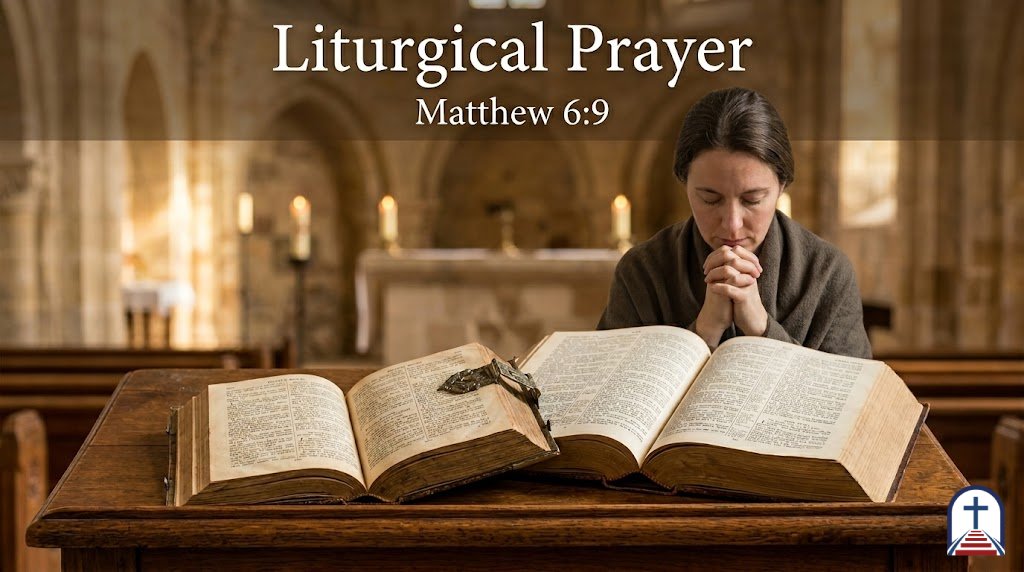
Liturgical Prayer
Discipleship S.T.E.P.S.: Practice
Scripture: After this manner therefore pray ye: Our Father which art in heaven, Hallowed be thy name. – Matthew 6:9 (KJV)
We often feel that if our prayers aren’t spontaneous, they aren’t ‘authentic.’ Yet, Jesus gave His disciples a structured prayer (The Lord’s Prayer) to serve as a framework for our relationship with the Father. Historical and liturgical prayers are like ancient paths that keep us from wandering into self-centeredness. They help us focus on the grandeur of God’s character before we rush to our personal requests, grounding us in the theology and faith of the global church across centuries.
Try using a structured prayer today—perhaps the Lord’s Prayer, a Psalm, or a classic prayer from church history. Read it slowly, pausing to meditate on every phrase. You will find that these prayers take your heart where it wouldn’t naturally go on its own. They teach you how to reverence God, how to confess, and how to surrender, moving you away from ‘me-centered’ praying into ‘God-centered’ communion.
Prompt: How can utilizing structured, historical prayers deepen your personal communion with God?
Action Step: The Practice of liturgical or structured prayer provides a biblical framework when we struggle to find our own words.
Next Step: Pray the Lord’s Prayer slowly today, pausing to meditate on each phrase.